

Tired All Day? 7 Ways to Support Better Sleep with PMOS
If you have PMOS and feel permanently tired, it is tempting to assume that you simply need to get to bed earlier. Sometimes that helps. But good sleep is not only about the number of hours you spend in bed.
Sleep timing, light exposure, caffeine, movement, stress and underlying sleep disorders can all affect how rested you feel. PMOS itself also appears to be associated with a greater burden of sleep problems, including obstructive sleep apnoea.
The good news is that supporting sleep does not require a perfect evening routine or an expensive collection of supplements. Start with the basics that have the strongest evidence behind them.
Here are seven places to begin.
1. Anchor Your Day with a Regular Wake Time
When sleep has gone off track, people often focus entirely on bedtime. In practice, your wake time can be just as useful.
Your body has an internal circadian clock that helps coordinate sleep and wakefulness across roughly 24 hours. Keeping your wake time reasonably consistent gives that system a regular daily cue.
This does not mean you need to get up at precisely 6.42am every day or panic if you have a lie-in at the weekend. The aim is consistency, not perfection.
If your sleep pattern currently varies considerably, begin by choosing a realistic wake-up window that you can maintain most days. Once that becomes more consistent, your evening sleepiness may also become more predictable.
This can be particularly useful in autumn and winter, when darker mornings and evenings can make our usual light cues less obvious.
2. Get Outside in the Morning
Light is one of the strongest environmental signals to our circadian system.
Morning daylight tells the brain that the biological day has begun and helps reinforce the timing of the sleep-wake cycle. You do not need specialist equipment to make use of this. For most people, simply getting outdoors after waking is a sensible starting point.
That could mean walking the dog, drinking your morning coffee outside, walking part of the school run or stepping outside before beginning work.
3. Look at When You Are Drinking Caffeine
Caffeine can be extremely useful when you are tired, which is precisely why it can become part of a difficult cycle. Poor sleep leads to more coffee. More coffee, particularly later in the day, can then make the following night's sleep harder.
A 2023 systematic review and meta-analysis found that caffeine reduced total sleep time and sleep efficiency and increased the time it took to fall asleep. The researchers estimated that a typical coffee containing around 107 mg caffeine would need to be consumed approximately nine hours before bed to avoid reducing total sleep time.
That does not mean everyone needs a rigid nine-hour caffeine curfew. People metabolise caffeine differently and the caffeine content of coffee varies enormously. But if you are struggling with sleep, it is worth experimenting.
If you normally have caffeine throughout the afternoon, try moving your final coffee or caffeinated tea earlier for a couple of weeks and see whether anything changes.
Remember that caffeine can also turn up in energy drinks, cola, chocolate and pre-workout products.
4. Move Your Body, Even If You Are Tired
Exercise often gets presented as another thing you “should” be doing for PMOS. I prefer to think of movement as something that can support several systems at the same time.
Regular physical activity can benefit metabolic health, mood and cardiovascular fitness, and research also supports a role for exercise in improving sleep quality.
A 2025 systematic review and meta-analysis of 81 randomised controlled trials found that exercise improved both subjective sleep quality and objective sleep efficiency in non-athlete adults.
You do not need to train intensely to benefit.
Walking, resistance training, cycling, swimming, Pilates and other forms of movement can all contribute. The best option is one you can do consistently and recover from.
And if evening exercise works for you, you do not automatically need to stop. The idea that everybody must avoid exercise after a certain time is too simplistic. Pay attention to your own response. If a hard late-night session leaves you wired at bedtime, move it earlier where practical. If an evening Pilates class helps you unwind, there may be no reason to change it.
5. Eat Regularly Rather Than Trying to Be “Good” All Day
There is no magic PMOS dinner that guarantees eight hours of uninterrupted sleep.
But how you eat during the day can affect how you feel in the evening.
If you have survived on coffee, skipped lunch and tried to keep calories as low as possible, arriving home ravenous at 7pm is not a character flaw. It is a predictable biological response.
For many women with PMOS, regular meals containing adequate protein, fibre-rich carbohydrates, vegetables and healthy fats are a more useful foundation than swinging between restriction and overeating.
Try to make dinner satisfying rather than deliberately tiny. Equally, if very large or rich meals close to bedtime leave you uncomfortable or refluxy, give yourself more time between eating and lying down.
Alcohol is worth noticing too. It may make you feel sleepy initially, but sedation is not the same as good-quality sleep and alcohol can fragment sleep later in the night.
The goal is not another set of food rules. It is to remove avoidable obstacles to sleep.
6. Give Your Brain a Chance to Wind Down
The advice to “avoid screens” before bed is often presented as though blue light is the whole story.
It is more complicated than that.
Screens can affect sleep through light exposure, but also because of what we are doing on them. Work emails, social media, upsetting news or an absorbing television series can keep the brain alert long after we intended to switch off.
Try and create some separation between your active day and sleep. That might mean lowering the lights, putting work away, reading, stretching, having a shower or writing tomorrow's jobs down so you are not rehearsing them in bed.
7. Know When Sleep Hygiene Is Not Enough
This may be the most important tip.
If you are consistently giving yourself enough opportunity to sleep but still wake exhausted, the answer is not necessarily better curtains, magnesium or another cup of herbal tea.
The updated International Evidence-Based PMOS Guideline highlights the increased prevalence of obstructive sleep apnoea in women with PMOS. Snoring combined with waking unrefreshed, daytime sleepiness or fatigue warrants further assessment. Importantly, this increased prevalence is not explained by BMI alone.
Other symptoms such as waking gasping or choking, witnessed pauses in breathing or morning headaches also deserve medical attention.
Long-term insomnia deserves proper support too. NICE recommends cognitive behavioural therapy for insomnia, CBT-I, as first-line treatment for chronic insomnia rather than relying on sleep-hygiene advice alone.
Persistent fatigue can also have other causes, including iron deficiency, thyroid problems, mood disorders and medication effects. If you are sleeping for what should be long enough but still feel exhausted, discuss it with your GP.
Start with One Thing
If your sleep is poor, you do not need to tackle all seven of these tomorrow.
Choose the issue that sounds most like you.
If you drink coffee at 4pm, start there. If you barely see daylight until lunchtime, try a morning walk. If your bedtime varies by three hours every night, work on consistency. If you snore and wake exhausted, make the GP appointment rather than buying another sleep supplement.
Sleep matters in PMOS, but it should not become another area in which you feel you have to be perfect.
The aim is not to achieve an immaculate bedtime routine.
It is to understand what may be getting in the way of restorative sleep and make the changes that are actually worth making.

Why PMOS and Poor Sleep Often Go Together
If you have PMOS and regularly wake feeling as though you have barely slept, struggle with afternoon energy crashes, or find your cravings noticeably worse after a bad night, you know that it has got something to do with your condition.
Sleep might sometimes feel like an optional extra in PMOS management: you’re already working on eating well, exercising, managing stress. But research increasingly suggests that sleep and PMOS are more closely connected than we once thought. Women with PMOS appear to experience more sleep problems, and one condition in particular, obstructive sleep apnoea, is important enough to be highlighted in the International Evidence-Based Guideline for PMOS.
At the same time, poor sleep can influence glucose regulation, appetite, mood and energy, all of which may already be challenging when you have PMOS.
So, what is actually going on?
PMOS and Sleep: More Connected Than We Realised
PMOS, previously known as PCOS, is not simply a condition of the ovaries. It involves a complex interaction between reproductive hormones, metabolic health and wider body systems.
A 2025 systematic review and meta-analysis examining obstructive sleep apnoea in women with PCOS found a substantially higher prevalence than in women without the condition. Across the studies included, around 37% of women with PCOS met the criteria for obstructive sleep apnoea, compared with around 6% of controls.
That is a striking difference.
It does not mean that 37% of everyone with PMOS has sleep apnoea. The studies differed considerably and some involved selected groups of women. However, the association is strong enough that it should not be ignored.
Research has also identified possible differences in sleep quality and circadian rhythm in PMOS, including changes in sleep efficiency and some hormonal markers involved in the sleep-wake cycle. This is interesting, but the science is still developing.
But we now know that sleep deserves a place alongside nutrition, movement and metabolic health when we think about PMOS.
The Blood Sugar Connection
One reason sleep matters is its effect on glucose regulation.
Experimental studies have shown that restricting sleep can reduce insulin sensitivity. This may be particularly relevant in PMOS because insulin resistance is already common.
When cells become less responsive to insulin, the body needs to produce more of it to manage blood glucose effectively. Insulin also interacts with ovarian androgen production, which is one reason metabolic and reproductive features of PMOS are so closely linked.
This does not mean that a couple of late nights will suddenly make your PMOS worse. Human physiology is far more complicated than that. But, if you are working hard on your food and movement while regularly only getting five or six hours sleep, or spending eight hours in bed but waking repeatedly, sleep may be an overlooked part of the picture.
Why Cravings Can Feel Worse After a Bad Night
Have you noticed how differently you want to eat when you are exhausted? After a poor night's sleep, the breakfast you planned can suddenly seem far less appealing than a large coffee and something sweet.
That is not simply a lack of willpower.
Sleep restriction can influence appetite, food reward and food intake, although the mechanisms are more complicated than social media sometimes suggests.
You may have heard that poor sleep automatically raises the hunger hormone ghrelin and lowers leptin, the hormone involved in satiety. In reality, studies have produced inconsistent results. Poor sleep can certainly affect how and what we eat, but changes in these two hormones do not explain everything.
There are also very practical reasons. When you are exhausted, shopping, cooking and making considered choices all require more effort. Highly palatable convenience foods become more tempting. You may rely on more caffeine to get through the afternoon, which can then interfere with the next night's sleep.
This can create an unhelpful cycle:
Poor sleep → less energy → more reliance on caffeine and convenience foods → harder appetite regulation → another disrupted night.
Rather than responding by becoming stricter with your diet, it can be more useful to ask why you are sleeping badly in the first place.
Could It Be Sleep Apnoea?
This is perhaps the most important part of the conversation.
Obstructive sleep apnoea, or OSA, occurs when the upper airway repeatedly narrows or closes during sleep. Breathing becomes restricted or briefly stops, and the brain repeatedly moves the body into lighter sleep so that normal breathing can resume. You may therefore spend seven or eight hours in bed and still wake feeling completely unrefreshed.
The International Evidence-Based Guideline states that women with PMOS have a higher prevalence of obstructive sleep apnoea than women without PMOS, independent of BMI.
That last point matters.
Higher body weight is a recognised risk factor for sleep apnoea, but someone should not automatically be assumed to be too slim or otherwise “not the type” to experience it. The guideline recommends assessment when snoring occurs alongside symptoms such as waking unrefreshed, daytime sleepiness or fatigue.
Other possible signs include witnessed pauses in breathing, waking choking or gasping and morning headaches.
If several of these sound familiar, particularly snoring combined with daytime tiredness or unrefreshing sleep, it is worth discussing with your GP rather than assuming fatigue is simply another PMOS symptom you have to live with.
Diagnosis requires proper medical assessment, often including a sleep study.
What About Hormones and Sleep?
Researchers are also exploring how androgens, insulin, body composition, mood and sleep may interact in PMOS.
Melatonin is one of the hormones involved in regulating the sleep-wake cycle, and differences in melatonin patterns have been reported in PMOS research.
This does not mean everyone with PMOS needs to take melatonin. In the UK, melatonin is a prescription-only medicine, and current evidence does not support treating altered melatonin as a routine nutritional problem in PMOS.
It is more useful to see sleep as part of a wider network. Hormonal, metabolic, psychological, environmental and behavioural factors can all influence how well we sleep.
Where Can You Start?
Fortunately, supporting better sleep does not require an elaborate “hormone reset”.
Start with consistency. Going to bed and getting up at roughly similar times helps reinforce the body's sleep-wake rhythm.
Morning daylight is useful too. Natural light provides an important signal to the brain that daytime has begun, which is particularly relevant as mornings become darker in autumn.
Next, look at caffeine. If a bad night means coffee at breakfast, another at 11am and another after lunch, caffeine can gradually become part of the next night's problem. If you are sensitive to it, try moving your last caffeinated drink earlier.
Make sure you are eating enough as well. Going to bed ravenously hungry because you have spent the day restricting food is unlikely to help. Regular meals containing good-quality protein, fibre-rich carbohydrates, vegetables and healthy fats can support steadier daytime energy.
Regular movement can support sleep as well as metabolic health, although very intense exercise late in the evening does not suit everyone.
Most importantly, look beyond sleep hygiene if you remain exhausted.
Perfect blackout blinds and a carefully designed bedtime routine will not fix obstructive sleep apnoea. Nor will they address iron deficiency, thyroid problems, restless legs, significant anxiety or another underlying cause of persistent fatigue.
Sometimes the right next step is not another supplement. It is asking whether something needs investigating.
The Bigger Picture
Good sleep will not cure PMOS, and nobody should feel that their symptoms exist because they have failed to perfect their bedtime routine.
But sleep is not a luxury either.
If we only talk about food, weight and exercise, we miss an important part of metabolic and hormonal health.
For some women, small changes to sleep routines may make a noticeable difference to how they feel during the day. For others, the most valuable step may be recognising that persistent fatigue, snoring or unrefreshing sleep deserves proper investigation.
So, if you feel as though you are doing “all the right things” for your PMOS but are still exhausted, perhaps the next question is not what else you need to remove from your diet.
It might simply be: How well are you actually sleeping?
And don’t forget, you can always book a free call with us here, if you’d like to discuss further.

PMOS Myth-busting: What Does the Science Really Say?
PMOS, previously known as PCOS, is one of the most common endocrine conditions affecting women, yet it remains surrounded by misinformation. Search online and you may be told that you need to lose weight, stop eating carbs, exclude dairy and gluten, take a pricey supplement, or identify your exact “type” of PMOS before you can improve your health.
Some of these ideas contain a grain of science. Others are misleading. And some can make an already complicated condition even harder to navigate.
So, for PMOS Awareness Month, let's look at what the evidence actually tells us.
Myth 1: You need ovarian cysts to have PMOS
Despite the old name, you do not need ovarian cysts to have PMOS. In fact, what have traditionally been described as “cysts” are actually numerous small ovarian follicles rather than cysts in the usual medical sense.
In adults, diagnosis generally requires two of three features: ovulatory dysfunction, clinical or biochemical androgen excess, and polycystic ovarian morphology on ultrasound or elevated AMH where appropriate. This means someone can have irregular periods and androgen excess and meet the diagnostic criteria without having polycystic ovaries at all.
Equally, an ultrasound showing polycystic ovarian morphology does not automatically mean someone has PMOS.
Myth 2: PMOS only affects women who are overweight
PMOS can occur at any body size. Higher body weight can worsen insulin resistance and some metabolic features in susceptible individuals, but it does not cause PMOS.
Insulin resistance can also occur in women with a BMI within the healthy range. The Monash International Evidence-Based Guideline specifically states that women with PMOS have an increased risk of impaired glucose tolerance and type 2 diabetes regardless of age or BMI.
Myth 3: You need to cut out carbohydrates
Carbs have acquired a particularly bad reputation in the PMOS world because of the relationship between glucose, insulin and insulin resistance.
But having insulin resistance does not mean carbohydrates need to disappear from your diet altogether.
The international guideline concludes that there is no evidence that one particular macronutrient composition is superior for everybody with PMOS. What we eat alongside carbohydrates, the amount we eat, how processed they are, and our overall dietary pattern all influence the glucose response.
There is a considerable nutritional difference between a sugary drink and a meal containing lentils, vegetables and wholegrains, yet all contain carbohydrate.
Myth 4: Everyone with PMOS should give up gluten and dairy
There is currently no recommendation in the international PMOS guideline for routine gluten or dairy exclusion.
Someone with coeliac disease needs to avoid gluten. Someone with lactose intolerance may benefit from adapting their dairy intake. Food allergy or other gastrointestinal conditions may require individual dietary changes.
But that is completely different from saying gluten or dairy causes PMOS.
Unnecessary exclusion can also reduce dietary variety and make it harder to obtain nutrients such as fibre, calcium, iodine and protein, depending on what foods are removed and how they are replaced.
Your diet should be personalised because of your health needs, not because everybody with PMOS has been given the same prohibited-food list.
Myth 5: Losing weight will cure PMOS
Weight loss may improve metabolic and reproductive outcomes for some women living with excess weight, but weight loss is not a cure for PMOS.
PMOS also occurs in lean women, and the underlying genetic and endocrine susceptibility does not disappear because somebody reaches a particular number on the scales.
Importantly, the international guideline recognises that healthy lifestyle changes have benefits even in the absence of weight loss.
Physical activity can improve insulin sensitivity. Resistance training can support muscle and glucose disposal. A nutritious diet can improve diet quality and cardiometabolic health. Better sleep and stress management may influence metabolic and psychological wellbeing.
Those changes have value even when somebody's weight remains stable.
The guideline also specifically calls upon healthcare professionals to recognise and minimise weight stigma in PMOS care.
Myth 6: There are four root-cause types of PMOS
You may have seen quizzes telling you that you have “insulin-resistant PCOS”, “adrenal PCOS”, “inflammatory PCOS” or “post-pill PCOS”.
This is not an internationally recognised diagnostic classification.
There are recognised PMOS phenotypes based on different combinations of ovulatory dysfunction, hyperandrogenism and polycystic ovarian morphology.
And there is absolutely biological variation within PMOS. Insulin resistance may be particularly prominent in one person. Another may have significant adrenal androgen production. Inflammation, stress physiology, sleep and metabolic health can vary considerably between individuals.
But these systems also interact. They do not divide neatly into separate boxes.
For example, somebody may have insulin resistance, raised adrenal androgens, and increased inflammatory signalling simultaneously.
Understanding individual drivers can be useful. Believing that everyone belongs to one simple “root cause type” is less helpful.
Myth 7: A supplement can “balance your hormones”
If only it were that simple.
Supplements including inositol, vitamin D, omega-3 fatty acids, NAC and various herbal products are widely promoted for PMOS.
Some have interesting evidence, but the quality and consistency of that evidence vary considerably.
Supplements can form part of an individualised programme, but they should not replace assessment of nutrition, sleep, physical activity, metabolic health or appropriate medical care.
Myth 8: PMOS only matters if you want to get pregnant
This may be the most damaging misconception of all.
PMOS is a leading cause of ovulatory infertility, but fertility is only one part of the condition.
Women with PMOS have increased risks relating to impaired glucose tolerance and type 2 diabetes, cardiovascular risk factors, obstructive sleep apnoea and endometrial health. Anxiety, depression, body-image distress and disordered eating are also considerably more common.
This is why modern PMOS care should consider metabolic, cardiovascular, psychological and sleep health as well as periods and fertility.
Nobody should be told to simply “come back when you want a baby”.
Myth 9: If you have PMOS, you won't be able to get pregnant
PMOS can make conception more difficult, particularly when ovulation is irregular or absent.
But PMOS does not mean infertility is inevitable.
Some women with PMOS ovulate regularly, while others ovulate intermittently. Many conceive naturally, and effective fertility treatments are available when help is needed.
If pregnancy is a goal, improving preconception health is worthwhile, but women should also know that they have evidence-based treatment options rather than feeling that PMOS has removed the possibility of motherhood.
Myth 10: Perhaps the biggest myth: there is one answer for everyone
If there is one message to take away from PMOS Awareness Month, it is that PMOS affects every woman differently.
That means good PMOS care should not begin with: “Everyone with PCOS needs to do this.”
It should begin with: “What is happening for you?”
But there is a growing evidence base that can help us understand the condition, identify individual priorities and make informed decisions about long-term health. And that is far more useful than another list of foods you're apparently never allowed to eat again.
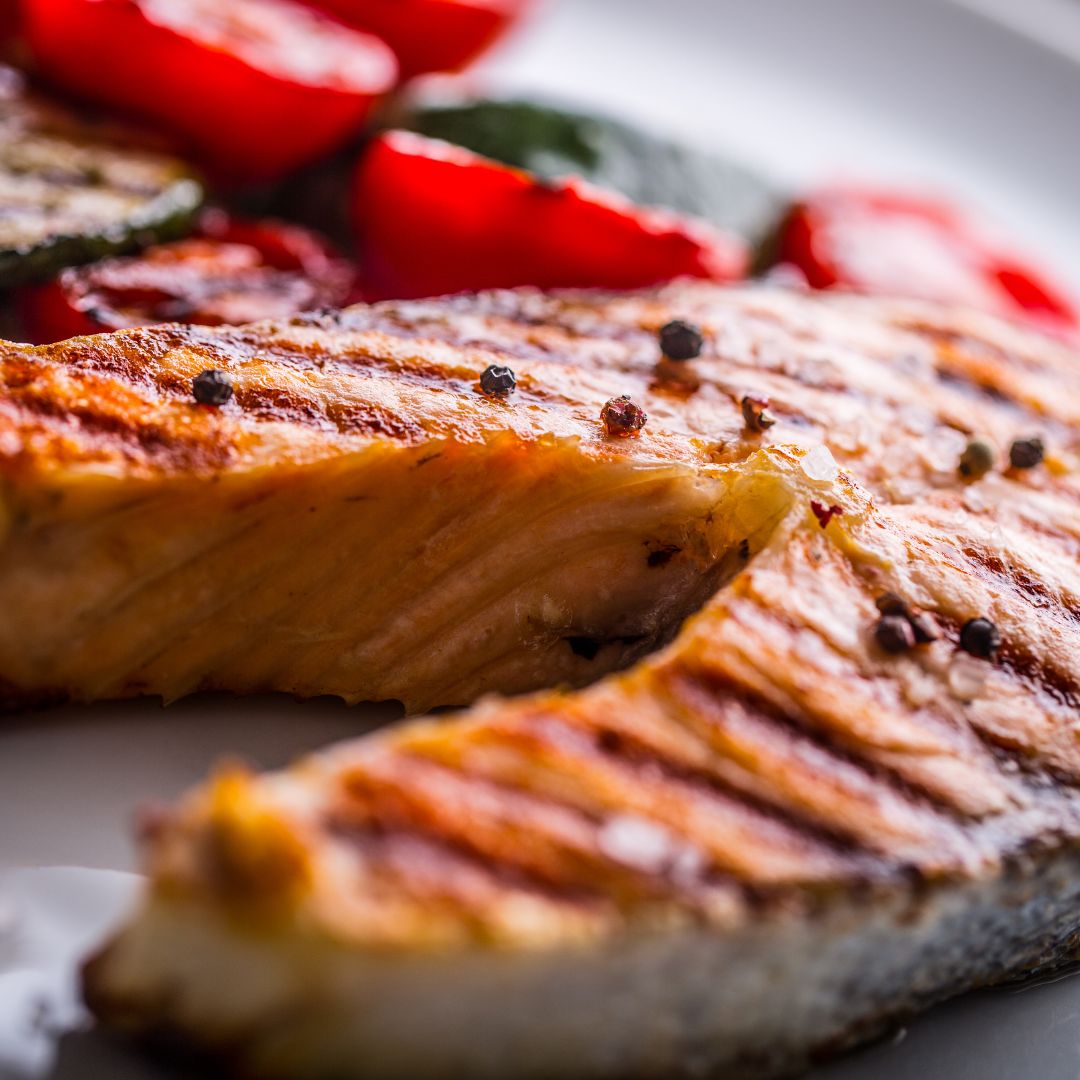
Herby Salmon with Roasted Tomatoes, Aubergine and Lentils
Healthy eating for PMOS does not need to mean cutting out carbs, following complicated food rules or cooking a completely separate “hormone-balancing” meal.
In fact, one of the most useful approaches is often much simpler: build meals around good-quality protein, plenty of vegetables, fibre-rich carbohydrates and healthy fats.
This colourful salmon traybake does exactly that.
It combines oily fish with lentils, aubergine, tomatoes, peppers, herbs and extra virgin olive oil to make a satisfying Mediterranean-style meal that delivers protein, fibre, omega-3 fats and a wide range of plant nutrients.
And because almost everything cooks in one roasting dish, it is very easy to make.
Herby Salmon with Roasted Tomatoes, Aubergine and Lentils
Serves 4
Ingredients
To serve
Method
A useful template for other meals
One reason I like this recipe is that you can use the same basic formula well beyond this particular dish.
Think:
protein + fibre-rich carbohydrate + plenty of vegetables + healthy fats + flavour.
For example, that could be chicken with chickpeas and roasted vegetables, tofu with edamame and brown rice, or eggs with beans, vegetables and avocado.
There does not need to be anything exotic about eating well with PMOS.
Rather than asking whether an individual food is “good” or “bad for your hormones”, it can be much more helpful to look at the whole meal.
Those are far more useful questions than trying to follow an ever-growing list of PMOS food rules.
If you like this recipe, why not check out more PMOS-friendly recipes in our Recipe Index.

How to Prepare for Your GP Appointment
If you think you may have PMOS, making that first GP appointment can feel surprisingly difficult.
Perhaps your periods have always been irregular. Maybe you have developed acne, facial hair or thinning hair. Perhaps you are struggling with fertility, weight changes or fatigue. Or you may simply have a collection of symptoms that nobody has yet connected.
Preparing beforehand can help you use your appointment well and give your GP a clearer picture of what has been happening.
This does not mean arriving with a self-diagnosis or demanding a long list of blood tests. It means being able to describe your symptoms, menstrual history and wider health clearly so that you and your doctor can decide what needs investigating.
Before your appointment: write down your symptoms
PMOS can affect much more than periods, so think about the whole picture.
Make a note of any symptoms you have experienced, including:
You do not need to have all of these to have PMOS.
Also note when symptoms started and whether they have changed. Gradual facial hair growth over several years, for example, gives your doctor different information from very rapid new hair growth accompanied by other marked hormonal changes.
Take your menstrual history with you
Your cycle history is particularly useful because one of the main diagnostic features of PMOS is ovulatory dysfunction.
If possible, make a note of:
A period-tracking app can be useful, but a simple calendar or written record works just as well.
If you have gone for long periods without menstruating, tell your GP. Infrequent periods matter not only for diagnosis but because prolonged untreated amenorrhoea can increase the risk of endometrial hyperplasia.
Tell your GP about medication and contraception
This is especially important if you take the combined oral contraceptive pill or another hormonal treatment.
Hormonal contraception can change androgen production and increase sex hormone-binding globulin, or SHBG, making biochemical assessment of androgen excess more difficult.
That does not mean you should stop contraception yourself before your appointment.
Instead, tell your GP exactly what you are using, how long you have used it and what your periods and symptoms were like before you started. If hormonal testing is necessary, your doctor can advise whether medication affects the interpretation and what the safest next step should be.
Bring a list of other medicines and supplements too.
Family history can provide useful clues
PMOS has a strong genetic component, so tell your GP if your mother, sisters or other close relatives have PMOS or similar symptoms.
It is also useful to mention a family history of type 2 diabetes, gestational diabetes or cardiovascular disease, because PMOS is associated with increased metabolic risk.
And if you have previously had gestational diabetes yourself, make sure this is included.
What is your GP actually looking for?
PMOS is not diagnosed by one blood test. In adults, diagnosis is generally based on finding at least two of three features after other possible explanations have been excluded:
Ovulatory dysfunction, usually demonstrated by irregular or absent menstrual cycles.
Clinical or biochemical hyperandrogenism, meaning physical signs, such as acne or facial hair, or laboratory evidence of increased androgen activity.
Polycystic ovarian morphology, assessed by ultrasound, or raised AMH where appropriate.
If irregular cycles and hyperandrogenism are already present, an ultrasound or AMH measurement may not be necessary.
This is why simply asking for an ovarian scan is not the best way to investigate suspected PMOS. You can have PMOS without polycystic-looking ovaries, and you can have polycystic ovarian morphology without having the syndrome.
What blood tests might be considered?
Exactly which tests are appropriate will depend on your symptoms, age, medication and medical history.
To investigate biochemical hyperandrogenism, the international guideline recommends total and free testosterone, with calculated free testosterone or the Free Androgen Index commonly used in assessment.
If testosterone is not elevated but androgen excess is still suspected, other androgens such as androstenedione or DHEAS may sometimes provide additional information.
Your GP may also investigate other conditions that can produce similar symptoms. Depending on your individual presentation, this can include thyroid dysfunction, raised prolactin and non-classic congenital adrenal hyperplasia. This differential diagnosis is important. Irregular periods, acne, hair growth and hair loss are not exclusive to PMOS.
If androgen levels are markedly elevated, or symptoms such as hirsutism or virilisation have developed rapidly, further investigation may be needed to exclude less common causes.
Don't forget metabolic health
One of the biggest changes in our understanding of PMOS is recognising that assessment should extend beyond reproductive hormones.
Women with PMOS have an increased risk of impaired glucose tolerance and type 2 diabetes regardless of age or BMI.
The 2023 international guideline recommends assessing glycaemic status at diagnosis. A 75g oral glucose tolerance test, or OGTT, is considered the most accurate method of assessing glycaemic status in PMOS. If an OGTT cannot be performed, fasting glucose and/or HbA1c may be considered, although they are less accurate in this population.
This is worth knowing because a normal body weight does not automatically mean that metabolic screening is unnecessary.
Current international guidance also recommends assessing cardiovascular risk factors. This includes a lipid profile at diagnosis and blood-pressure assessment, with future monitoring depending on individual risk.
So, if the conversation focuses entirely on your periods, it is reasonable to ask: “Do we also need to consider my metabolic health?”
What about insulin testing?
This is an area where there is considerable confusion online. Insulin resistance is an important part of PMOS physiology, but the international guideline does not currently recommend routinely available insulin assays for diagnosing or monitoring insulin resistance in everyday clinical practice because currently available measures are not sufficiently accurate or standardised.
That may seem contradictory, particularly when insulin plays such an important biological role in PMOS. The distinction is that insulin resistance is mechanistically important, but routine clinical insulin measurements do not yet provide a sufficiently reliable diagnostic measure of it.
This is why the guideline concentrates on assessing glycaemic status and wider metabolic risk.
Tell your GP what matters most to you
PMOS management should not revolve solely around fertility.
You might be most concerned about facial hair. It might be acne.
You might want to understand why your cycles have disappeared.
You might be trying to conceive.
Or perhaps your greatest concern is fatigue, weight changes, anxiety or your future risk of diabetes.
Say this.
The international guideline specifically emphasises person-centred care and recognises the significant effects PMOS can have on quality of life, body image and psychological wellbeing.

PCOS/PMOS Explained: More Than Just Period Problems
If you have ever been told that PCOS is simply a problem with periods, fertility or “cysts on the ovaries”, you have only been given part of the picture.
In May 2026, polycystic ovary syndrome, or PCOS, was officially renamed Polyendocrine Metabolic Ovarian Syndrome, or PMOS. The new name was chosen after an extensive international process involving researchers, healthcare professionals and people living with the condition.
It reflects something increasingly important in our understanding of PMOS: this is a complex endocrine and metabolic condition involving far more than the ovaries. PMOS can affect menstrual cycles and fertility, but it can also influence insulin regulation, androgen production, skin and hair, cardiovascular health, sleep, mental health and longer-term metabolic health.
Understanding those connections can make PMOS feel considerably less mysterious.
What is PMOS?
PMOS is a syndrome, meaning that it describes a collection of features rather than one single symptom. Around one in eight women are thought to be affected worldwide, but PMOS does not look the same in everybody.
Symptoms can include:
Some women experience many of these. Others have only a few. Importantly, you can have PMOS in a smaller body, have PMOS without acne, and have PMOS without the ultrasound appearance traditionally described as “polycystic ovaries”.
How is PMOS diagnosed?
In adults, current international guidance generally requires two of three features, once other possible causes have been excluded:
If both irregular cycles and hyperandrogenism are already present, ultrasound or AMH testing may not be required. And despite the old name, these are not ovarian “cysts” in the usual medical sense. They are numerous small follicles.
Diagnosis in teenagers is approached differently because irregular cycles and acne can both occur normally during puberty.
But what actually drives PMOS?
This is where PMOS becomes much more interesting.
There is no single cause. Genetics clearly contribute, but researchers increasingly understand PMOS as the result of interacting hormonal and metabolic pathways.
These can include:
These systems influence one another, potentially creating reinforcing biological loops.
Insulin: not simply a blood sugar issue
Insulin is one of the most important hormones to understand in PMOS.
After we eat foods containing carbohydrate, glucose enters the bloodstream and the pancreas releases insulin. Insulin helps move glucose into cells where it can be used for energy or stored.
With insulin resistance, cells do not respond as effectively to insulin. The pancreas therefore often compensates by producing more. This can result in hyperinsulinaemia or higher circulating insulin levels.
But insulin does far more than manage blood glucose. Higher insulin levels can stimulate ovarian theca cells to produce more androgens. It can also reduce the liver's production of sex hormone-binding globulin, or SHBG, which means more testosterone remains biologically available. The result can be greater androgen activity, which contributes to acne, facial or body hair growth, weight gain, scalp hair thinning, and disruption of normal follicle development and ovulation.
Higher androgen levels may alter body fat distribution and adipose tissue function and contribute to poorer insulin sensitivity. So, we can begin to see a feedback loop between insulin and androgens, rather than one hormone being solely responsible.
Androgens don't only come from the ovaries
Another commonly overlooked part of PMOS is the adrenal glands. Androgens, such as testosterone, are often associated with ovarian production, but the adrenal glands also produce androgen precursors including DHEA and DHEAS. And research suggests that approximately 20–30% of women with PMOS demonstrate excess adrenal precursor androgen production.
The adrenal glands form part of the body's hypothalamic-pituitary-adrenal, or HPA, axis, which coordinates our physiological stress response. Research has identified altered HPA-axis and stress responsiveness in some women with PMOS.
This gives us another potential connection between stress physiology, adrenal hormone production and androgen symptoms.
What about chronic stress?
Stress is often discussed too simplistically. Cortisol is not a “bad hormone”. We need it to wake up in the morning, maintain blood pressure, mobilise energy and respond appropriately to threats and demands.
Problems really arise when the stress response is activated frequently without adequate recovery.
Cortisol and other stress hormones help make energy available by increasing glucose availability. In the short term, this is useful. Persistently altered stress physiology, however, can interact with insulin sensitivity, appetite regulation, visceral fat deposition, and sleep.
This does not make stress the cause of PMOS, but it does make stress biologically relevant rather than simply an issue of emotional wellbeing.
And there is another important relationship here: PMOS itself can be stressful.
Unpredictable periods, fertility concerns, acne, unwanted hair growth, weight stigma, and years of feeling unheard can create significant psychological stress. Anxiety and depressive symptoms are also considerably more common in women with PMOS.
So again, the relationship may run in both directions.
Where does inflammation fit?
Low-grade inflammation is another important part of the PMOS picture. Inflammation is an essential part of normal immune function. The problem is not inflammation itself, but persistent low-grade inflammatory signalling.
Research has consistently found higher levels of several inflammatory markers in women with PMOS, although body composition and other metabolic factors can contribute. Inflammatory signalling can interfere with insulin signalling, potentially worsening insulin resistance.
Studies have also linked inflammation and oxidative stress with circulating androgen levels, while experimental work has shown that suppressing inflammation and oxidative stress may reduce ovarian androgen hypersecretion.
At the same time, insulin resistance, visceral adipose tissue and androgen excess can themselves encourage inflammatory signalling.
Once again, we have a potential feedback loop.
Inflammation may worsen insulin signalling. Higher insulin may increase ovarian androgen production. Androgen excess and changes in adipose tissue (fat tissue) may then contribute to further metabolic and inflammatory dysfunction.
Why does all this matter?
Because PMOS should never be treated as though the only important questions are: “Are your periods regular?” and “Do you want to get pregnant?”.
Current international guidance recognises increased risks relating to glucose regulation, type 2 diabetes, cardiovascular risk factors, obstructive sleep apnoea, endometrial health and psychological wellbeing.
This does not mean that somebody with PMOS will inevitably develop these conditions. But it does mean there are good reasons to think beyond reproductive symptoms and look at the whole person.
What can we do about it?
There is no single PMOS diet, and current evidence does not show that everyone with PMOS needs to follow one particular dietary pattern.
Instead, nutrition and lifestyle strategies should be individualised.
Depending on the person, priorities might include improving overall diet quality, supporting healthy glucose and insulin regulation, eating adequate protein and fibre, incorporating a diverse range of plant foods, moving regularly, including resistance exercise, improving sleep and addressing chronic stress.
And importantly, the international guideline recognises that healthy lifestyle changes can produce benefits even without weight loss.





For any conditions other than PMOS, please feel free to be in touch with our sister clinic Alex Allan Nutrion
PMOS Clinics is part of the Green Leaf Company (London) Ltd, a limited company registered in England and Wales. Registered number: 10990293
Disclaimer: ‘Please note that nutritional therapy is not medical advice - this should always be sought from your doctor or other medical provider. We aim to work alongside your doctor or GP to provide nutritional and lifestyle advice to support any underlying imbalances.'
Website by Phuse Media - Web Design Southend
