
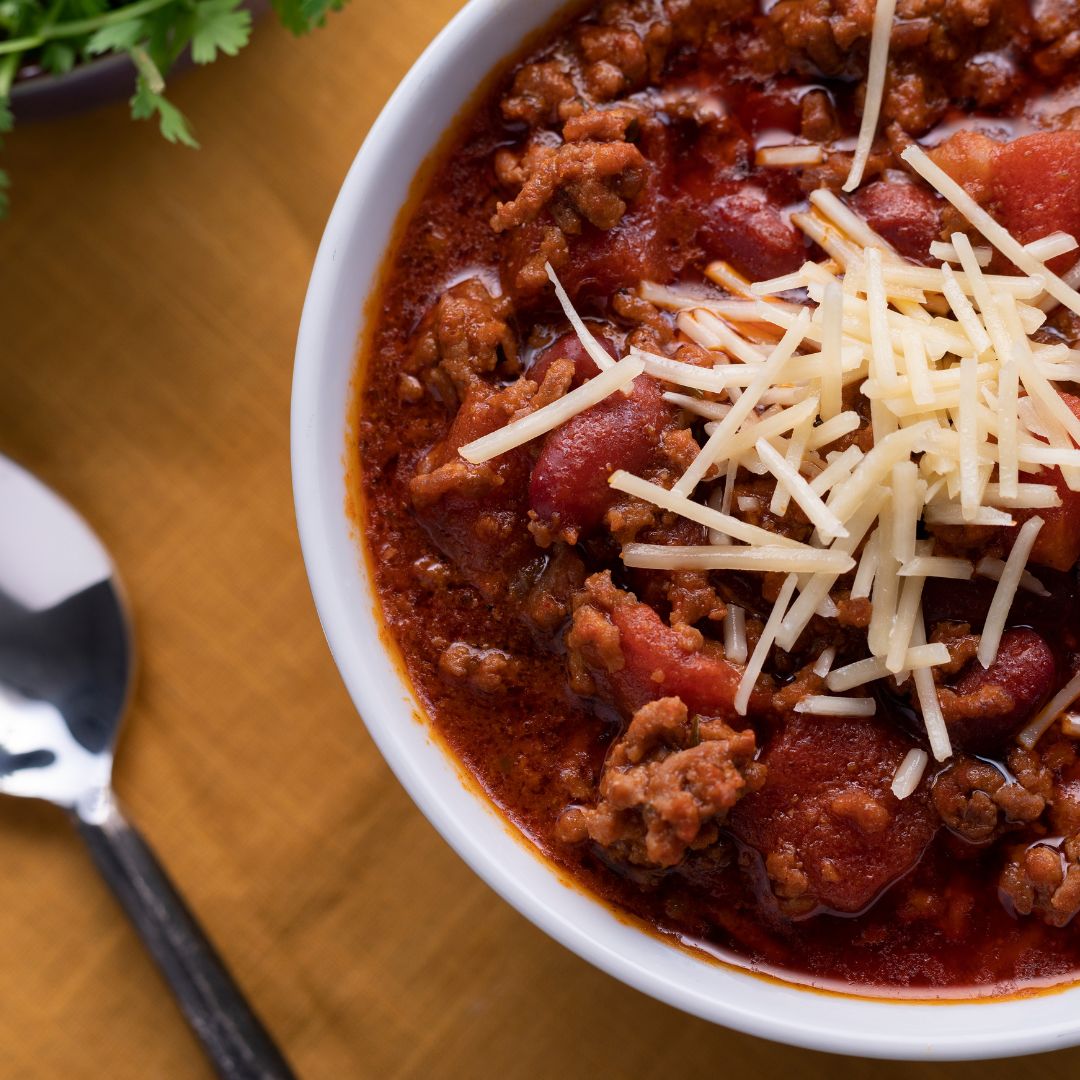
Smoky Turkey and Black Bean Chilli
November calls for a pot of something warming on the hob. This smoky chilli combines turkey thigh mince and black beans with butternut squash and cavolo nero, and lets smoked paprika, cumin and chipotle do the heavy lifting on flavour.
It also brings together everything we have talked about this month on appetite and PMOS, previously known as PCOS. Each serving provides around 33g of protein and 14g of fibre, with plenty of vegetables and a bowl generous enough to feel like a proper meal. It batch cooks beautifully too, which helps on the evenings when hunger arrives before the energy to cook.
Serves 4
Ingredients
To serve
Method
The chilli keeps for up to three days in the fridge and freezes well. Reheat until piping hot throughout.
Vegetarian Alternative
Leave out the turkey and use vegetable stock. Increase the black beans to three tins or use two tins of black beans and one of kidney beans, and add a 250g pouch of ready-cooked Puy lentils at the same time as the beans.
Top each bowl with the Greek yoghurt and a tablespoon of pumpkin seeds. Served this way, the vegetarian version provides around 31g of protein and 22g of fibre per serving.
That is a generous amount of fibre for one meal. If your usual intake is low, start with a smaller portion and build up.
Why This Works Well for PMOS
This is the template from last week's blog in a single pan.
The turkey and black beans provide most of the protein, with a little more from the Greek yoghurt on top. Turkey thigh mince has more flavour than breast and stays tender through a long simmer. If your pack is 500g, use it all and the protein rises to around 37 g per serving.
The beans, squash, carrots and greens provide the fibre: about 14g per serving, which is just under half of the 30g a day the NHS recommends for adults.
The vegetables, tomatoes and stock add volume, so the bowl is generous without being heavy. Olive oil and yoghurt add some fat, and there is plenty here to chew.
The carbohydrate comes mainly from beans and squash, eaten alongside protein, fibre and fat. If you would like more, a small portion of brown rice or a baked sweet potato sits well alongside.
If you’ve enjoyed this recipe, why not check out some of our other PMOS-friendly recipes over in the Recipe Index?
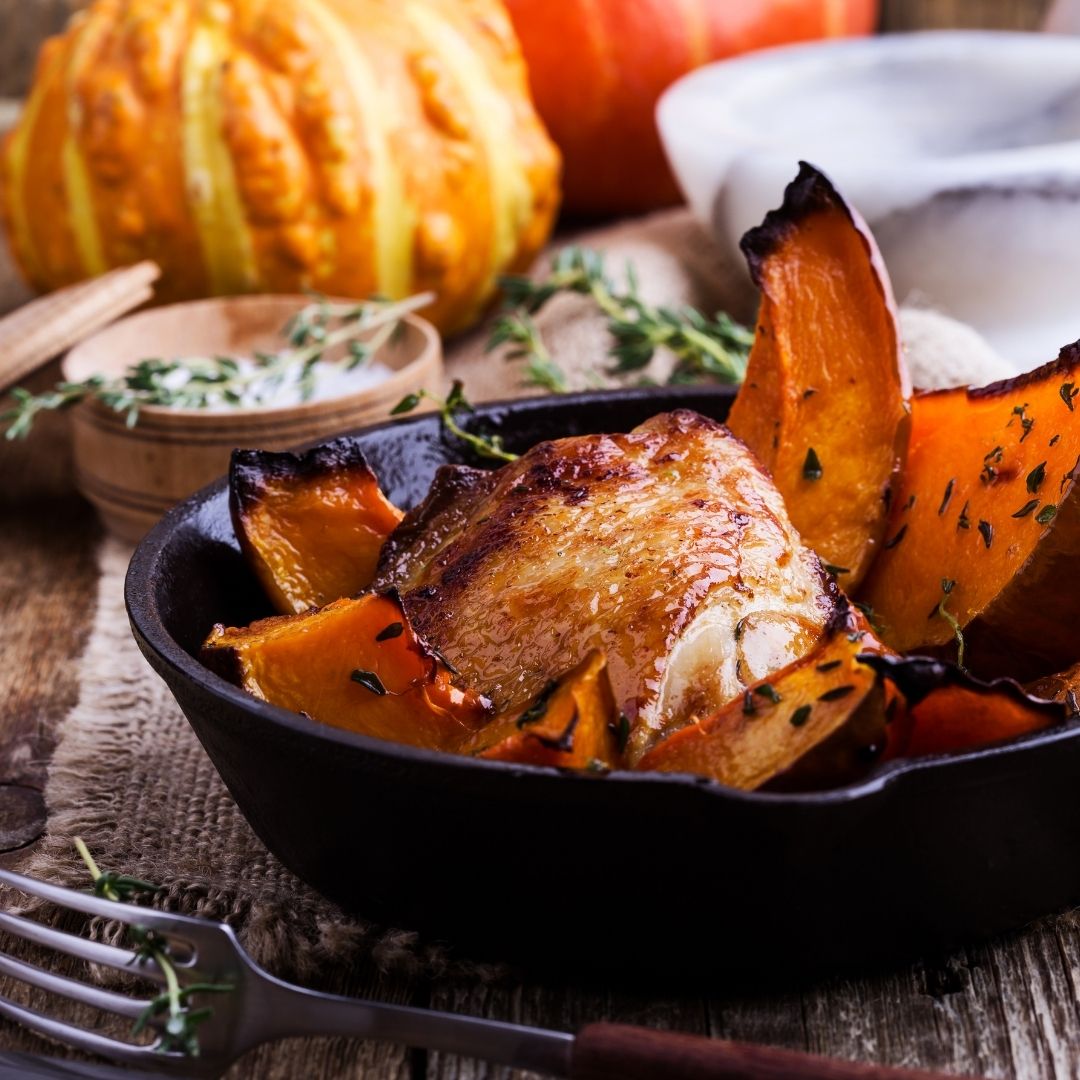
Autumn Chicken, Squash and Chickpea Traybake
This colourful autumn traybake combines protein-rich chicken and Greek yoghurt, and with fibre from chickpeas, squash and leafy greens. It makes a satisfying, balanced meal that can help support steadier energy and blood glucose regulation, both of which are particularly important in PMOS.
Chicken, yoghurt and pumpkin seeds also provide tryptophan, an essential amino acid that the body uses to make serotonin and subsequently melatonin. Melatonin is our sleep hormone, so ensuring we have the correct essential ingredients for it can be helpful.
Serves 4
Ingredients
To serve
Method
Why This Works Well for PMOS
This is a great example of what a balanced PMOS meal can look like without needing to remove carbohydrates. The chicken, chickpeas, Greek yoghurt and pumpkin seeds provide protein, helping to make the meal satisfying.
Chickpeas, squash, red onion and leafy greens also provide fibre, while extra virgin olive oil and pumpkin seeds add unsaturated fats.
The carbohydrate comes predominantly from squash and chickpeas rather than refined sources, and pairing carbohydrate with protein, fibre and fat helps slow digestion and produces a more balanced meal.
There is another interesting connection with this month's sleep theme. Chicken, Greek yoghurt and pumpkin seeds all contain tryptophan. Tryptophan is an essential amino acid that we obtain from food. In the body, it can be converted to serotonin, which can subsequently be used to produce melatonin, one of the hormones involved in regulating our sleep-wake cycle.
If you’ve enjoyed this recipe, why not check out some of our other PMOS-friendly recipes over in the Recipe Index?
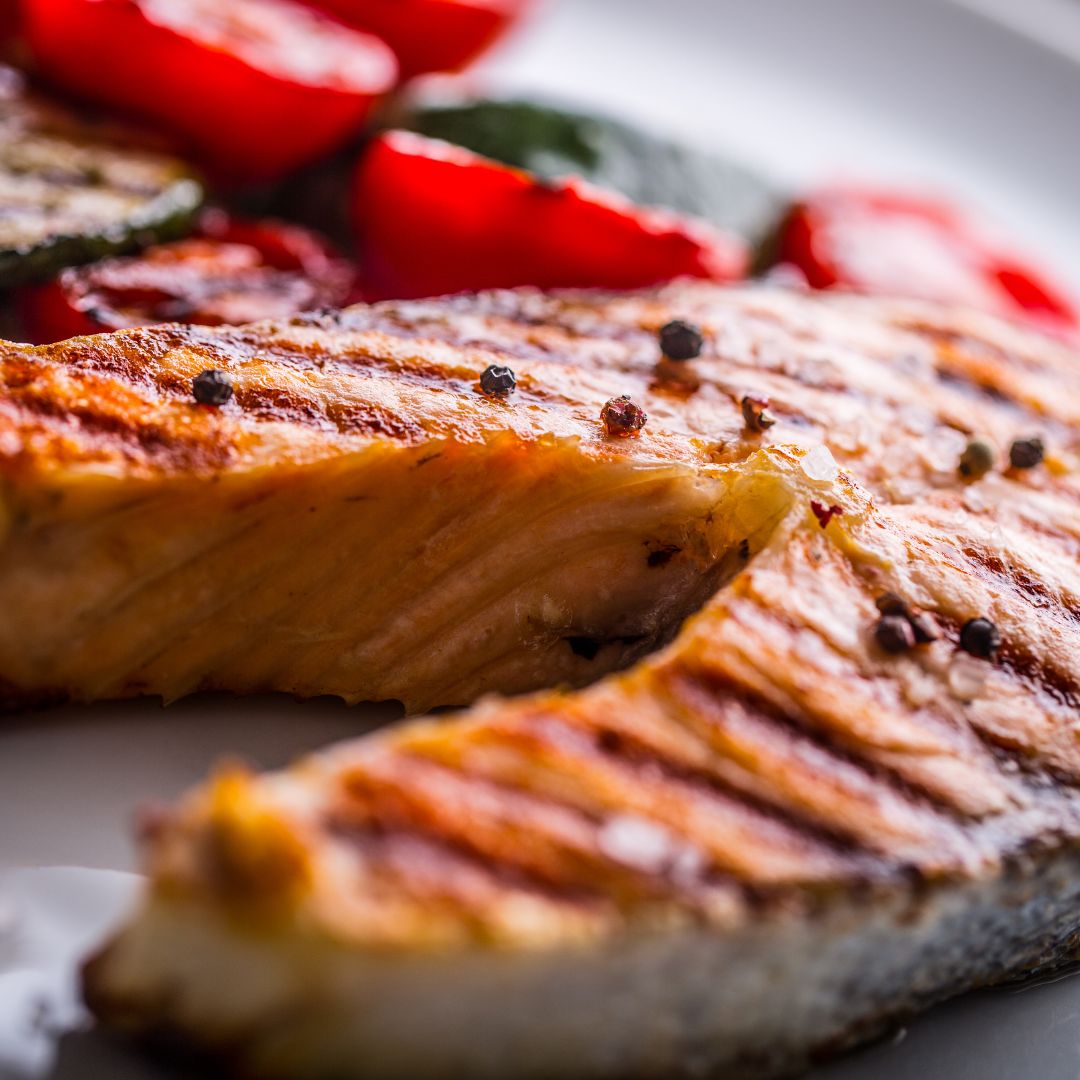
Herby Salmon with Roasted Tomatoes, Aubergine and Lentils
Healthy eating for PMOS does not need to mean cutting out carbs, following complicated food rules or cooking a completely separate “hormone-balancing” meal.
In fact, one of the most useful approaches is often much simpler: build meals around good-quality protein, plenty of vegetables, fibre-rich carbohydrates and healthy fats.
This colourful salmon traybake does exactly that.
It combines oily fish with lentils, aubergine, tomatoes, peppers, herbs and extra virgin olive oil to make a satisfying Mediterranean-style meal that delivers protein, fibre, omega-3 fats and a wide range of plant nutrients.
And because almost everything cooks in one roasting dish, it is very easy to make.
Herby Salmon with Roasted Tomatoes, Aubergine and Lentils
Serves 4
Ingredients
To serve
Method
A useful template for other meals
One reason I like this recipe is that you can use the same basic formula well beyond this particular dish.
Think:
protein + fibre-rich carbohydrate + plenty of vegetables + healthy fats + flavour.
For example, that could be chicken with chickpeas and roasted vegetables, tofu with edamame and brown rice, or eggs with beans, vegetables and avocado.
There does not need to be anything exotic about eating well with PMOS.
Rather than asking whether an individual food is “good” or “bad for your hormones”, it can be much more helpful to look at the whole meal.
Those are far more useful questions than trying to follow an ever-growing list of PMOS food rules.
If you like this recipe, why not check out more PMOS-friendly recipes in our Recipe Index.
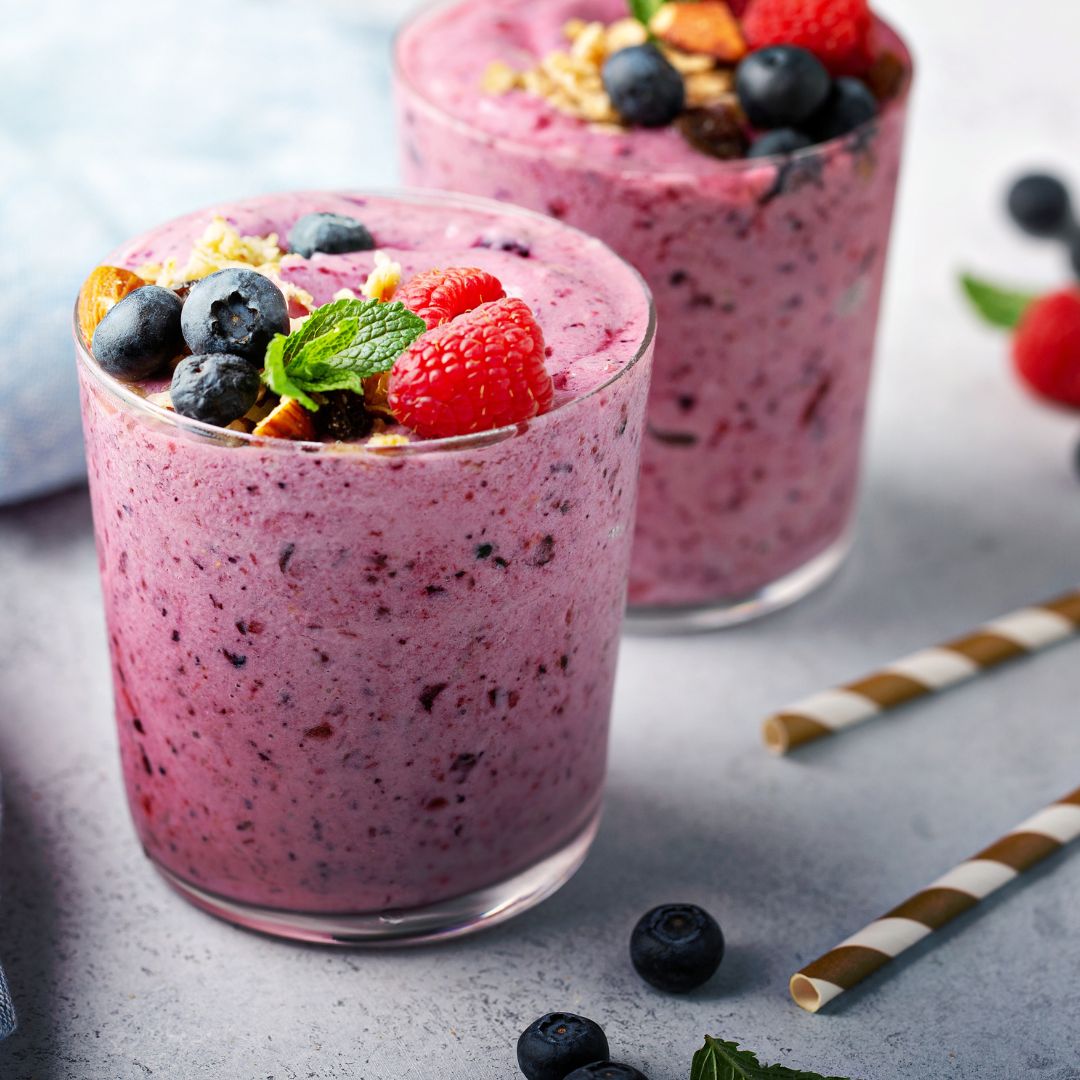
Antioxidant-Rich Summer Berry Smoothie
Cool, colourful and ready in five minutes, this summer berry smoothie makes a refreshing breakfast for warmer mornings.
Unlike smoothies made mainly from fruit juice, this recipe combines whole berries with protein, fibre and beneficial fats. This makes it more satisfying and creates a more balanced breakfast for women with polycystic ovary syndrome (PCOS), now also known as polyendocrine metabolic ovarian syndrome or PMOS.
The combination of mixed berries, protein-rich yoghurt or soya milk, ground flaxseed and chia seeds also provides nutrients involved in normal skin structure, antioxidant defence and digestive health.
It is important not to over-promise what a recipe can do. No smoothie can clear acne or correct a hormonal imbalance by itself. Skin health is influenced by many things including genes, androgen activity, insulin signalling, inflammation, stress and sleep, as well as the wider diet.
However, this smoothie can offer a convenient way to include protein, fibre, omega-3-rich seeds and several colourful plant foods in one meal.
Why Antioxidants Matter for Skin Health
Skin is continually exposed to ultraviolet light, pollution and normal metabolic processes that generate unstable molecules known as free radicals.
The body has its own antioxidant defence systems to manage these molecules. Nutrients and plant compounds obtained through food help support these systems, but antioxidants do not act as a simple internal sunscreen or “detox” treatment.
Berries are particularly rich in a family of polyphenols called anthocyanins. These are the plant pigments responsible for many of their red, purple and blue colours. Research suggests that anthocyanins can interact with antioxidant and inflammatory signalling pathways, although we cannot assume that eating berries will directly treat acne.
Berries also provide vitamin C, which is required for normal collagen formation and contributes to the protection of cells from oxidative stress.
Fresh berries are wonderful in summer, but frozen berries work just as well. They are often less expensive, reduce food waste and make the smoothie naturally cold and thick.
The protein and seeds are just as important as the berries. A fruit-only smoothie may be digested quickly and may not keep you satisfied for long. Adding protein, fat and fibre creates a more complete meal.
Serves 1
Ingredients
Method
Depending on the yoghurt and milk used, the basic recipe provides approximately 20 to 25 grams of protein. Adding a good quality protein powder can bring this closer to 30 grams.
Optional Additions:
To increase the protein
Add one of the following:
Choose a protein powder with a simple ingredient list and no sugars or sweeteners. A pea, soya or blended plant protein can be used if whey or dairy does not suit you.
Whey protein does not cause acne in everybody, but there are reports of acne worsening in some susceptible people after starting whey-based sports supplements. If your skin changed after introducing one, try a non-whey alternative rather than removing all dairy foods without good reason.
To increase the fibre
You could add:
Increase concentrated fibres gradually and drink enough fluid. Adding large amounts suddenly may cause bloating or discomfort.
To make it more filling
Smoothies are convenient, but drinking a meal can feel less satisfying than chewing one.
Make the smoothie thick enough to eat from a bowl and sprinkle with whole nuts and berries, or have it with a couple of boiled eggs, a slice of seeded toast or another protein-rich food if you know that smoothies alone do not keep you full.
You can also explore more balanced breakfasts, snacks and main meals in our PMOS Clinics Recipe Index.
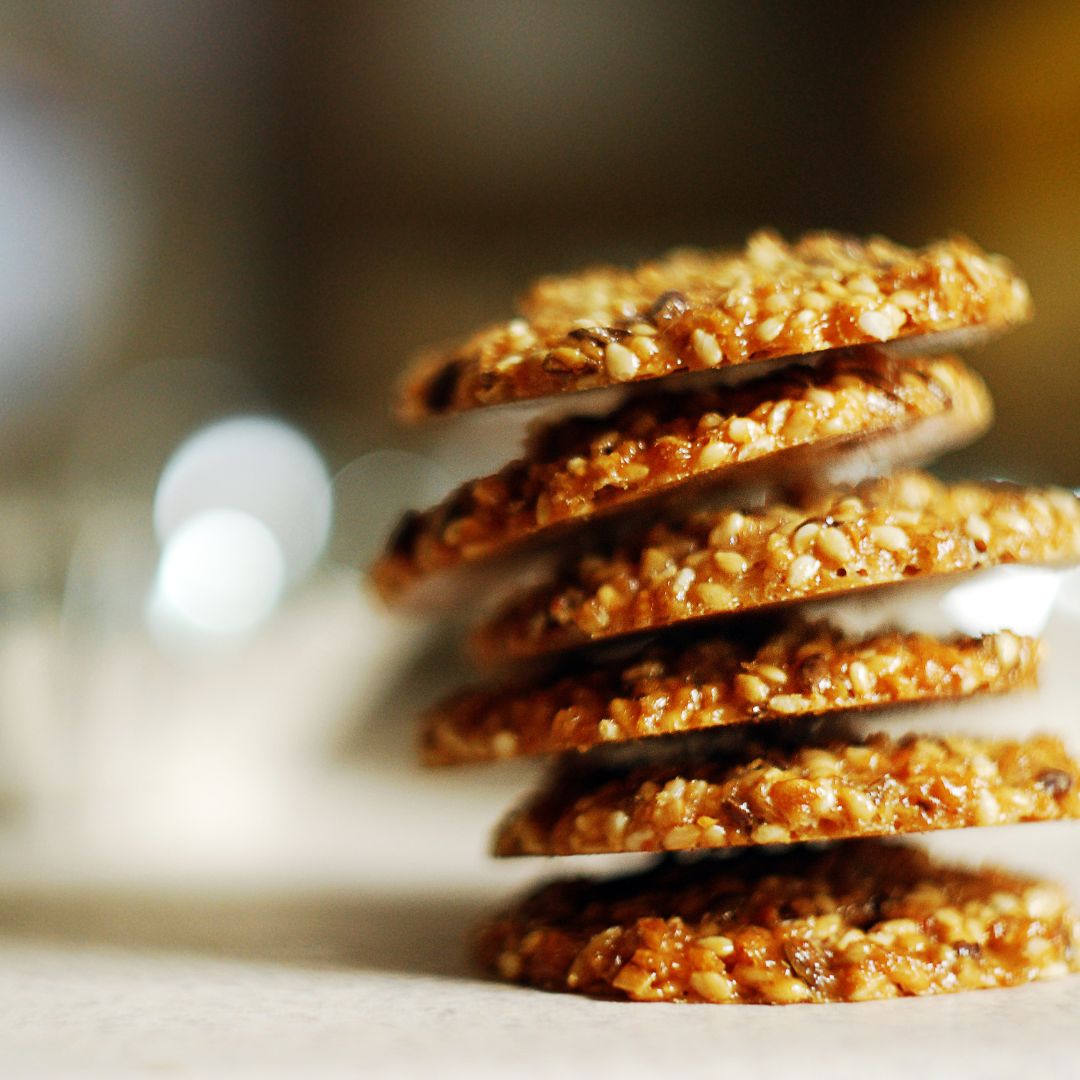
Portable PMOS-Friendly Snack: Savoury Seedy Oatcakes
Travel snacks can be tricky when you live with PMOS / PCOS.
Many of the easiest options are either very sweet, very beige, very low in protein, or not particularly satisfying. You might start the journey with good intentions, then find yourself relying on crisps, pastries, cereal bars, sweets or another round of coffee because there is very little else available.
There is nothing wrong with enjoying convenience foods sometimes. But if you are travelling, working long days, driving, flying or heading out for a summer day trip, having one or two reliable snacks with you can make a real difference to your energy, appetite, digestion and blood sugar balance.
These savoury oatcakes are designed to be portable, practical and satisfying. They combine oats, seeds, chickpea or buckwheat flour, herbs and olive oil to create a fibre-rich snack that pairs well with protein toppings such as cottage cheese, hummus, boiled eggs, smoked salmon, chicken, tuna, nut butter or Greek yoghurt.
They are not a replacement for meals, but they are a useful back-up option when you need something more substantial than a sweet snack bar.
Why Protein and Fibre Matter for PMOS While Travelling
When you are away from home, it is very easy for meals and snacks to become low in protein and fibre.
That might look like toast and jam for breakfast, a pastry at the station, crisps in the car, a muffin at the airport, or a sandwich with very little filling. These foods may be convenient, but they do not always keep you full for long. For women with PMOS, this can be especially relevant because PMOS is often linked with insulin resistance, cravings, fatigue and blood sugar fluctuations.
Protein helps meals and snacks feel more satisfying. It also supports muscle maintenance and many normal body functions. Fibre supports digestive regularity, stool consistency and the gut microbiome. Together, protein and fibre can help create a steadier, more satisfying snack, which may be useful if travel tends to disrupt your usual eating routine.
Oats are a particularly useful travel food because they are portable, versatile and contain beta-glucan, a type of soluble fibre. Seeds add extra fibre, minerals and healthy fats, while chickpea flour adds more protein and structure. If you are very sensitive to legumes, or if chickpea flour tends to make you bloated, you can use buckwheat flour instead.
As always, tolerance matters. A food can be nutritious and still not suit every gut. If you are prone to bloating, IBS-type symptoms or SIBO-type symptoms, start with a small portion and pair the oatcakes with foods you already know you tolerate.
This recipe makes approximately 14–16 oatcakes, depending on size and thickness.
Ingredients
150g rolled oats
60g chickpea flour or buckwheat flour
40g pumpkin seeds, roughly chopped
30g hemp seeds
20g ground flaxseed or chia seeds
20g nutritional yeast, optional but adds savoury flavour
1 teaspoon gluten-free baking powder
½ teaspoon sea salt
1 teaspoon dried rosemary, thyme or mixed herbs
½ teaspoon garlic granules, optional
½ teaspoon smoked paprika, optional
2 tablespoons extra virgin olive oil
120–150ml warm water
Optional: 1 tablespoon sesame seeds for the top
Method
Storage and Batch Cooking Tips
These oatcakes are ideal for batch cooking because they store well and are easy to pack.
Once completely cool, keep them in an airtight container for up to 5 days. If you want them to stay crisp, make sure they are fully cooled before storing. You can also freeze them for up to 3 months. Freeze in small portions, then defrost as needed.
For travel, pack them in a small container rather than a bag so they do not crumble in your handbag, rucksack or hand luggage.
You can also vary the flavour depending on what you enjoy. Rosemary and sea salt works well with cheese or hummus. Smoked paprika pairs nicely with avocado or chicken. Thyme and sesame seeds are lovely with cottage cheese or smoked salmon. If you prefer a plainer oatcake, leave out the stronger spices and keep the flavour simple.
If you have a sensitive gut, it is worth keeping the first batch simple. You may prefer buckwheat flour instead of chickpea flour, and you may wish to leave out garlic granules if garlic tends to trigger bloating.
Travel-Friendly Serving Ideas
The oatcakes are useful on their own, but they work best when paired with protein or healthy fats. This is especially helpful for PMOS because pairing carbohydrates with protein, fibre and fat can make snacks more satisfying and support steadier energy.
Try them with cottage cheese and cucumber, hummus and grated carrot, boiled eggs, smoked salmon and avocado, tuna with olive oil and lemon, chicken slices, nut butter, or a small pot of Greek yoghurt on the side.
For a road trip, pack oatcakes with a small pot of hummus, cheese, fruit and a bottle of water. For a flight, pair them with a protein option bought at the airport, such as boiled eggs, yoghurt, chicken salad or smoked salmon. For a hotel room snack, keep them with nut butter sachets, fruit or a small portion of nuts.
They can also be used as part of a light lunch. Add them to a plate with soup, salad, leftover frittata, roasted vegetables, tinned fish, avocado or a protein-rich dip.
If you are prone to blood sugar dips, try not to eat them completely on their own. They will usually be more satisfying when paired with protein or healthy fats.
Preparing Ahead Without Becoming Rigid
The point of a recipe like this is not to make travel food perfect.
It is to give you an easy option when your choices are limited. If you have something nourishing in your bag, you are less likely to become over-hungry, rely on coffee to push through, or grab the nearest ultra-processed snack simply because there is nothing else available.
That does not mean you need to pack all your food or avoid local meals. Holidays, weekends away and summer days out should still be enjoyable. But a little planning can give your body more stability, especially if travel tends to trigger bloating, cravings, fatigue, constipation or blood sugar dips.
Think of these oatcakes as a useful anchor. They are simple, portable and easy to pair with other foods. They support a food-first approach to PMOS travel nutrition without making things complicated.
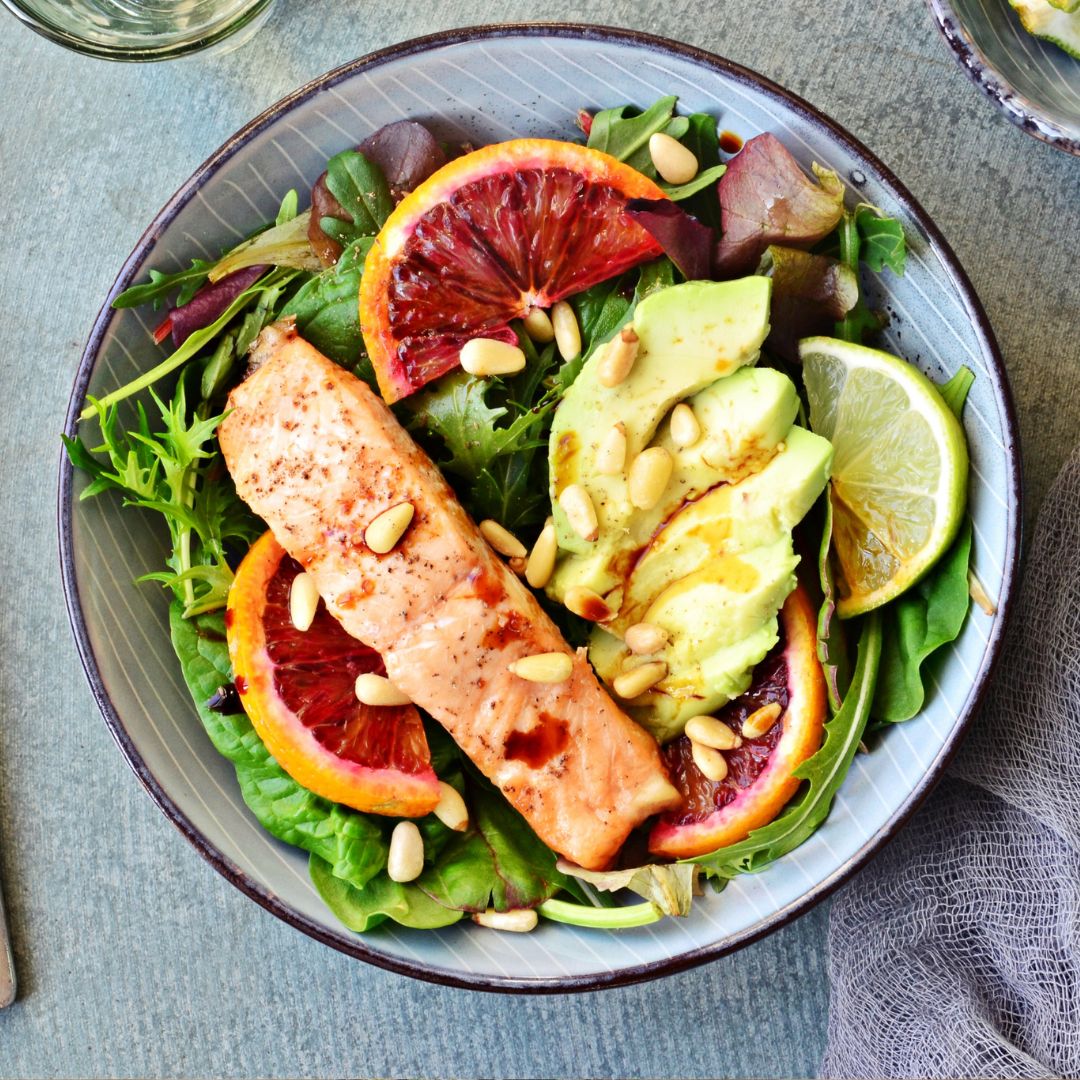
Hormone-Friendly Summer Salad with Avocado and Salmon
When the weather is warmer, we all naturally start craving lighter meals. The challenge is that salads can often leave you hungry an hour later, particularly if they are missing enough protein, fibre and healthy fats.
This summer salad is designed to be both fresh and satisfying, whilst also supporting blood sugar balance, energy and hormone health.
It combines protein-rich salmon with healthy fats from avocado, fibre-rich vegetables and polyphenol-rich herbs and leaves. It is also incredibly versatile and works well as a quick lunch or light dinner during busy summer weeks.
Why this salad supports hormone health
One of the key things I focus on with clients is building meals that help them feel fuller and more energised, rather than constantly grazing or relying on caffeine and sugar to get through the day.
This recipe contains several nutrients that may support hormone and metabolic health:
Protein Salmon provides high-quality protein which may help support blood sugar balance, muscle maintenance and appetite regulation.
Omega-3 fats Oily fish such as salmon is rich in omega-3 fatty acids, which are associated with cardiovascular, cognitive and inflammatory health. This can be particularly important for women with PMOS/PMOS and during perimenopause, where inflammation and metabolic health may become increasingly relevant.
Fibre The vegetables, leaves, seeds and avocado help increase fibre intake, which supports gut health, cholesterol balance and blood sugar regulation.
Magnesium and potassium Avocado, pumpkin seeds and leafy greens provide important minerals involved in stress regulation, muscle function and energy production.
Polyphenols Colourful vegetables, herbs and extra virgin olive oil contain polyphenols, plant compounds associated with gut and metabolic health.
Most importantly, this is a meal that feels realistic and enjoyable rather than restrictive.
Serves 2
Ingredients
Method
Easy ingredient swaps
This salad works well with lots of variations depending on what you have available.
You could try:





For any conditions other than PMOS, please feel free to be in touch with our sister clinic Alex Allan Nutrion
PMOS Clinics is part of the Green Leaf Company (London) Ltd, a limited company registered in England and Wales. Registered number: 10990293
Disclaimer: ‘Please note that nutritional therapy is not medical advice - this should always be sought from your doctor or other medical provider. We aim to work alongside your doctor or GP to provide nutritional and lifestyle advice to support any underlying imbalances.'
Website by Phuse Media - Web Design Southend
