
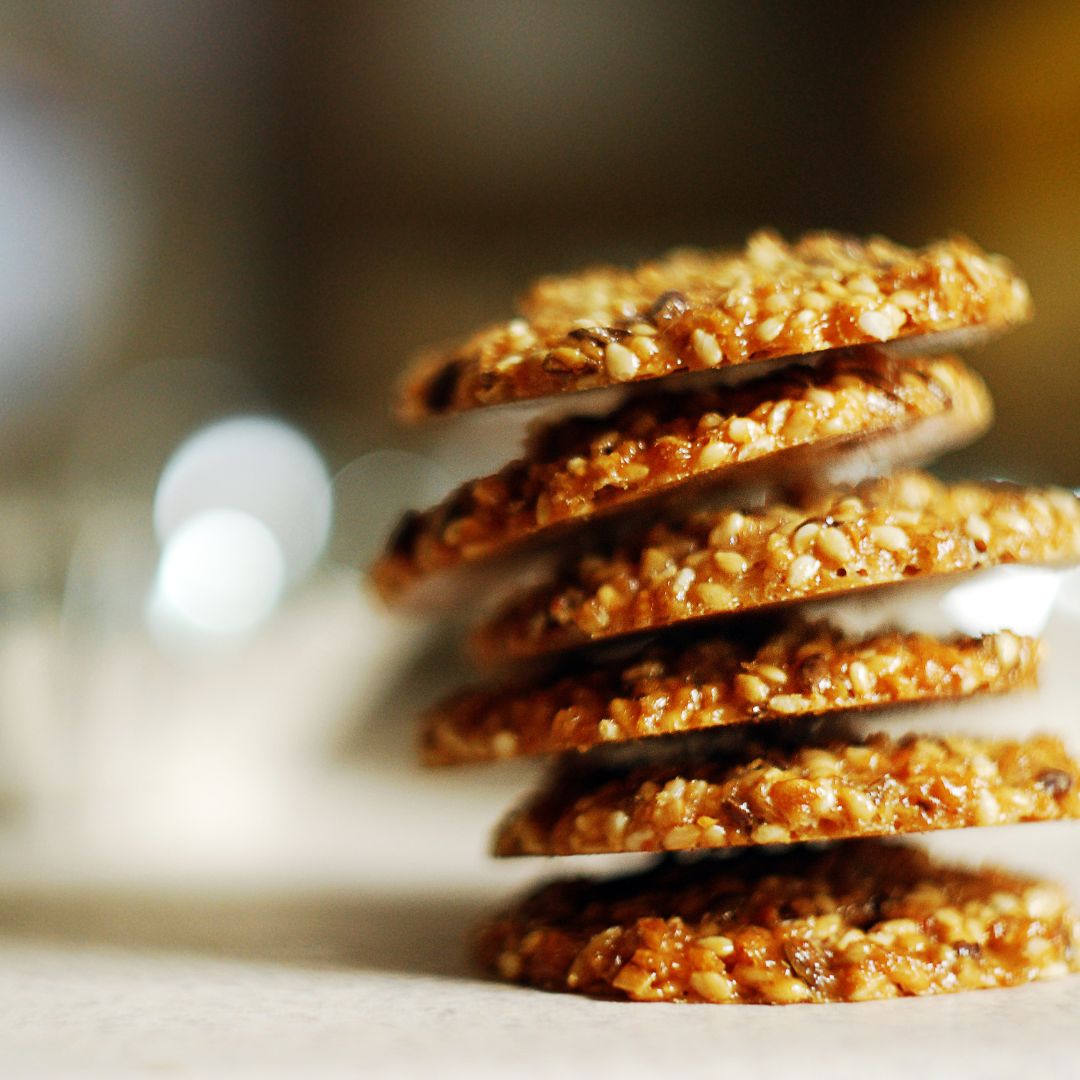
Portable PMOS-Friendly Snack: Savoury Seedy Oatcakes
Travel snacks can be tricky when you live with PMOS / PCOS.
Many of the easiest options are either very sweet, very beige, very low in protein, or not particularly satisfying. You might start the journey with good intentions, then find yourself relying on crisps, pastries, cereal bars, sweets or another round of coffee because there is very little else available.
There is nothing wrong with enjoying convenience foods sometimes. But if you are travelling, working long days, driving, flying or heading out for a summer day trip, having one or two reliable snacks with you can make a real difference to your energy, appetite, digestion and blood sugar balance.
These savoury oatcakes are designed to be portable, practical and satisfying. They combine oats, seeds, chickpea or buckwheat flour, herbs and olive oil to create a fibre-rich snack that pairs well with protein toppings such as cottage cheese, hummus, boiled eggs, smoked salmon, chicken, tuna, nut butter or Greek yoghurt.
They are not a replacement for meals, but they are a useful back-up option when you need something more substantial than a sweet snack bar.
Why Protein and Fibre Matter for PMOS While Travelling
When you are away from home, it is very easy for meals and snacks to become low in protein and fibre.
That might look like toast and jam for breakfast, a pastry at the station, crisps in the car, a muffin at the airport, or a sandwich with very little filling. These foods may be convenient, but they do not always keep you full for long. For women with PMOS, this can be especially relevant because PMOS is often linked with insulin resistance, cravings, fatigue and blood sugar fluctuations.
Protein helps meals and snacks feel more satisfying. It also supports muscle maintenance and many normal body functions. Fibre supports digestive regularity, stool consistency and the gut microbiome. Together, protein and fibre can help create a steadier, more satisfying snack, which may be useful if travel tends to disrupt your usual eating routine.
Oats are a particularly useful travel food because they are portable, versatile and contain beta-glucan, a type of soluble fibre. Seeds add extra fibre, minerals and healthy fats, while chickpea flour adds more protein and structure. If you are very sensitive to legumes, or if chickpea flour tends to make you bloated, you can use buckwheat flour instead.
As always, tolerance matters. A food can be nutritious and still not suit every gut. If you are prone to bloating, IBS-type symptoms or SIBO-type symptoms, start with a small portion and pair the oatcakes with foods you already know you tolerate.
This recipe makes approximately 14–16 oatcakes, depending on size and thickness.
Ingredients
150g rolled oats
60g chickpea flour or buckwheat flour
40g pumpkin seeds, roughly chopped
30g hemp seeds
20g ground flaxseed or chia seeds
20g nutritional yeast, optional but adds savoury flavour
1 teaspoon gluten-free baking powder
½ teaspoon sea salt
1 teaspoon dried rosemary, thyme or mixed herbs
½ teaspoon garlic granules, optional
½ teaspoon smoked paprika, optional
2 tablespoons extra virgin olive oil
120–150ml warm water
Optional: 1 tablespoon sesame seeds for the top
Method
Storage and Batch Cooking Tips
These oatcakes are ideal for batch cooking because they store well and are easy to pack.
Once completely cool, keep them in an airtight container for up to 5 days. If you want them to stay crisp, make sure they are fully cooled before storing. You can also freeze them for up to 3 months. Freeze in small portions, then defrost as needed.
For travel, pack them in a small container rather than a bag so they do not crumble in your handbag, rucksack or hand luggage.
You can also vary the flavour depending on what you enjoy. Rosemary and sea salt works well with cheese or hummus. Smoked paprika pairs nicely with avocado or chicken. Thyme and sesame seeds are lovely with cottage cheese or smoked salmon. If you prefer a plainer oatcake, leave out the stronger spices and keep the flavour simple.
If you have a sensitive gut, it is worth keeping the first batch simple. You may prefer buckwheat flour instead of chickpea flour, and you may wish to leave out garlic granules if garlic tends to trigger bloating.
Travel-Friendly Serving Ideas
The oatcakes are useful on their own, but they work best when paired with protein or healthy fats. This is especially helpful for PMOS because pairing carbohydrates with protein, fibre and fat can make snacks more satisfying and support steadier energy.
Try them with cottage cheese and cucumber, hummus and grated carrot, boiled eggs, smoked salmon and avocado, tuna with olive oil and lemon, chicken slices, nut butter, or a small pot of Greek yoghurt on the side.
For a road trip, pack oatcakes with a small pot of hummus, cheese, fruit and a bottle of water. For a flight, pair them with a protein option bought at the airport, such as boiled eggs, yoghurt, chicken salad or smoked salmon. For a hotel room snack, keep them with nut butter sachets, fruit or a small portion of nuts.
They can also be used as part of a light lunch. Add them to a plate with soup, salad, leftover frittata, roasted vegetables, tinned fish, avocado or a protein-rich dip.
If you are prone to blood sugar dips, try not to eat them completely on their own. They will usually be more satisfying when paired with protein or healthy fats.
Preparing Ahead Without Becoming Rigid
The point of a recipe like this is not to make travel food perfect.
It is to give you an easy option when your choices are limited. If you have something nourishing in your bag, you are less likely to become over-hungry, rely on coffee to push through, or grab the nearest ultra-processed snack simply because there is nothing else available.
That does not mean you need to pack all your food or avoid local meals. Holidays, weekends away and summer days out should still be enjoyable. But a little planning can give your body more stability, especially if travel tends to trigger bloating, cravings, fatigue, constipation or blood sugar dips.
Think of these oatcakes as a useful anchor. They are simple, portable and easy to pair with other foods. They support a food-first approach to PMOS travel nutrition without making things complicated.






For any conditions other than PMOS, please feel free to be in touch with our sister clinic Alex Allan Nutrion
PMOS Clinics is part of the Green Leaf Company (London) Ltd, a limited company registered in England and Wales. Registered number: 10990293
Disclaimer: ‘Please note that nutritional therapy is not medical advice - this should always be sought from your doctor or other medical provider. We aim to work alongside your doctor or GP to provide nutritional and lifestyle advice to support any underlying imbalances.'
Website by Phuse Media - Web Design Southend
