
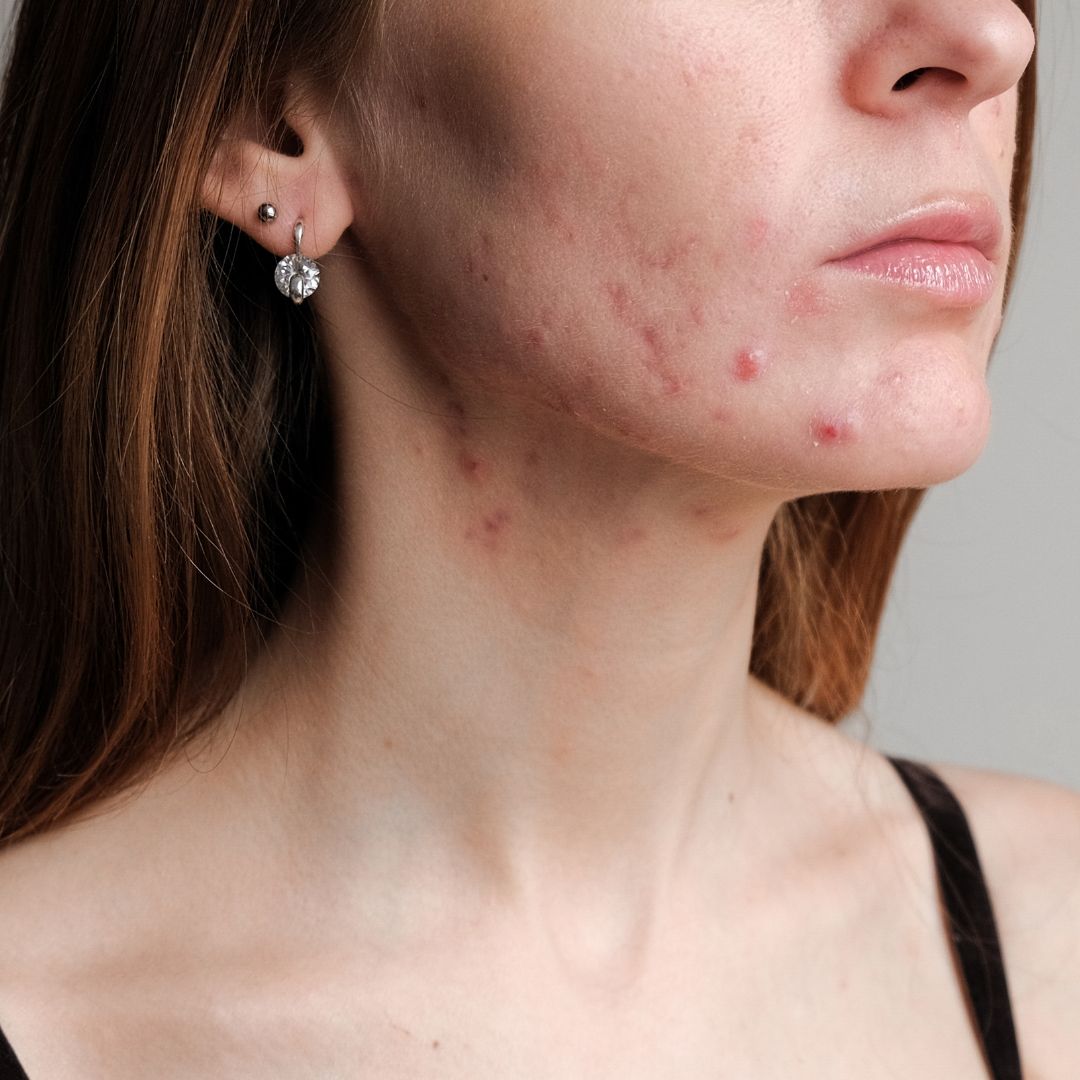
Why do we get acne with PMOS?
In a UK-based study, over 50% of women with PMOS reported experiencing acne, and highlighting its effect on their overall wellbeing. This compares to only 21% of British women without PMOS stating that they suffer with acne.
If you have PMOS, this might not be coming as much of a surprise to you! So, why do we women with PMOS suffer more with our skin than the average British woman?
This comes down to our hormone balance again. PMOS is an endocrine (hormonal) condition, and we see that most women with PMOS have higher androgen (or ‘male’ hormone) levels than women without PMOS.
The higher androgen levels in PMOS can stimulate overproduction of sebum in the skin which can clog pores causing spots to form. Additionally, the low-grade inflammation consistent with PMOS can make the acne worse and more painful, sometimes turning into cystic acne, the type of acne that causes deep, painful bumps. It also tends to flare up when stress is involved, or around the time of our periods.
PMOS-related acne is often found in areas of the body that are more androgen-sensitive, such as around the jawline, chin, chest, and back. This is because these areas have a higher density of androgen receptors, which respond to the higher levels of androgens more intensely. This leads to excess sebum production, as well as increased keratin production in the skin, which can clog pores and foster acne. The back and chest are particularly rich in oil glands, hence why those areas can be especially problematic.
The good news is that any of the dietary changes you make with your PMOS to help reduce androgens will then, in turn, help reduce the prevalence of acne that you’re suffering with.
Check out my blog about how to eat healthily for your skin. And, if you’d like to chat further, why not book a call? One of our one-to-one targeted programmes could be right for you.

PMOS and Fertility
Polycystic Ovarian Syndrome (PMOS) is a complex condition that often casts a shadow over the dream of parenthood for many women. Amidst the myriad of symptoms and challenges, fertility struggles stand as a significant concern for those with PMOS.
PMOS can bring about a range of symptoms, including irregular periods, elevated androgen levels, and ovarian cysts. Fertility struggles, often intertwined with these symptoms, can present a profound emotional toll on individuals and couples.
The Link PMOS between and Fertility
The intricate interplay between PMOS and fertility involves a complex dance of hormones, ovulation, and reproductive health. Here are some of the factors:
Managing PMOS for Improved Fertility Chances
Strategies aimed at addressing the unique challenges of PMOS-related fertility struggles can make a significant difference:
Hope on the Horizon
While the road to fertility for individuals with PMOS may present challenges, it's important to remember that hope is far from lost. Understanding the complexities of the connection between PMOS and fertility helps us to take proactive steps toward achieving our parenthood goals.
By addressing hormonal imbalances, adopting a healthy lifestyle, and seeking professional guidance, those of us navigating PMOS-related fertility struggles can move closer to our dream.
If you’d like to discuss this further, why not book in a call with us to discuss further? Here’s the link to book a call.

Untangling the Connection: Acne and PMOS
Polycystic Ovarian Syndrome (PMOS) is a multifaceted condition that impacts the lives of countless women, characterized by a range of frustrating and distressing symptoms. Among these, acne often takes centre stage, causing not just physical discomfort but also affecting self-esteem and confidence.
Here are some tell-tale signs that PMOS and acne may be intertwined:
How PMOS Triggers Acne
A combination of hormonal and metabolic factors can be factors in the severity of acne in women with PMOS, such as:
Managing Acne in PMOS
Strategies aimed at addressing the underlying hormonal imbalances and supporting skin health can make a huge difference in alleviating acne symptoms:
By addressing hormonal imbalances through dietary choices, skincare practices, stress reduction, and seeking professional guidance, individuals with PMOS can navigate the challenges of acne more effectively. Remember, managing acne isn't solely about achieving clear skin – it's about fostering overall health, enhancing self-confidence, and taking proactive steps toward feeling your best inside and out.
Would you like to know more? Why not book a free call with one of our team – just click here to book.

Navigating Weight Gain and PMOS
Among the challenges faced by us ladies with PMOS, unexplained weight gain stands out as a significant concern for many of us. Despite huge efforts to maintain a healthy lifestyle, weight gain may persist, especially around our middles. And trying to lose weight becomes a formidable challenge, often requiring loads more effort compared to those without PMOS.
Why is it so difficult to lose weight with PMOS?
It’s a complex condition, and there are several reasons why this might be the case:
Managing Weight Gain in PMOS
Strategies to address weight gain and promote overall wellbeing can make a significant difference in alleviating symptoms:
If you are struggling with weight due to PMOS, why not come and chat to one of our team about what’s going on for you and how we can support you. Click here for a free call.





For any conditions other than PMOS, please feel free to be in touch with our sister clinic Alex Allan Nutrion
PMOS Clinics is part of the Green Leaf Company (London) Ltd, a limited company registered in England and Wales. Registered number: 10990293
Disclaimer: ‘Please note that nutritional therapy is not medical advice - this should always be sought from your doctor or other medical provider. We aim to work alongside your doctor or GP to provide nutritional and lifestyle advice to support any underlying imbalances.'
Website by Phuse Media - Web Design Southend
