
Could It Be Sleep Apnoea?
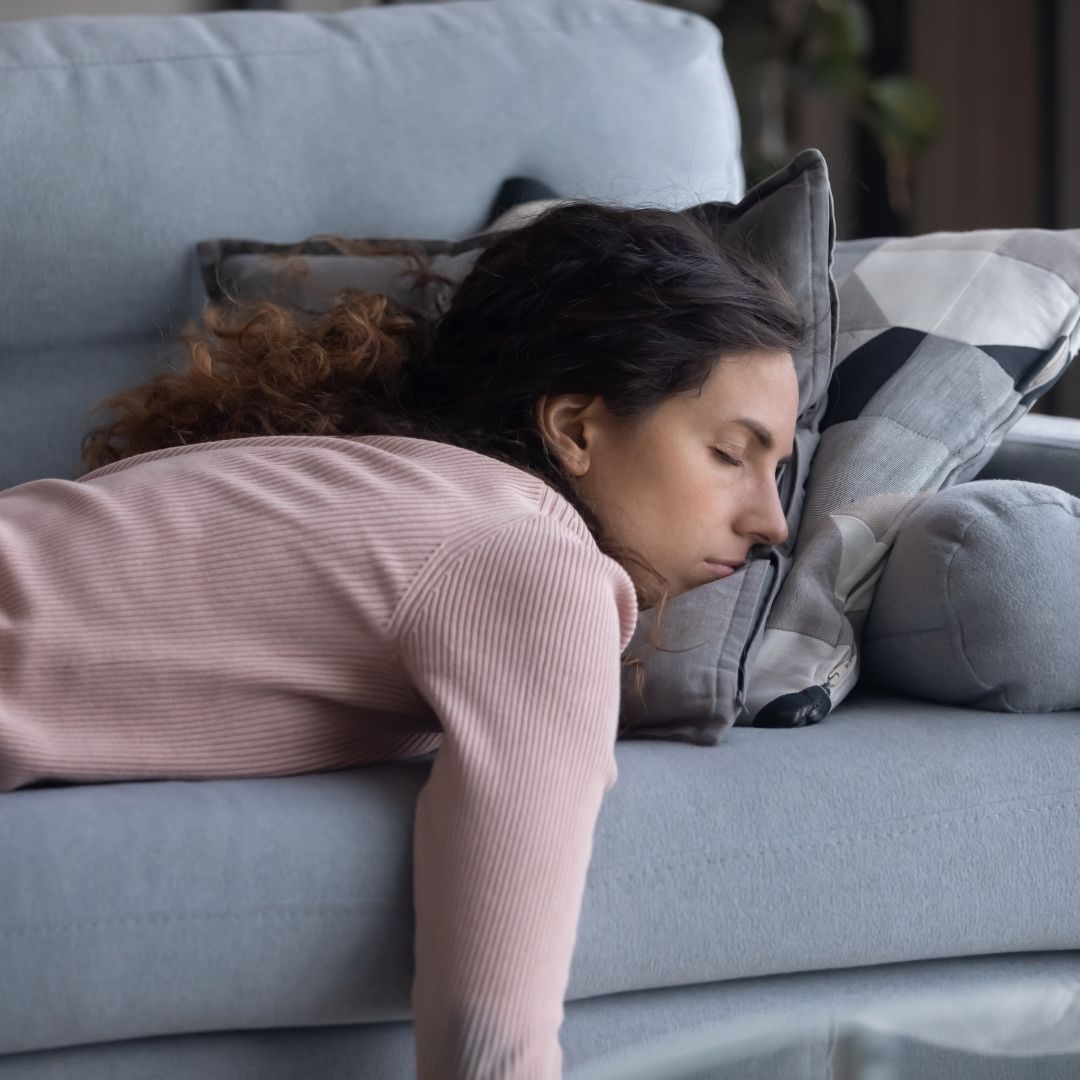
Do you sleep for seven or eight hours but still wake feeling exhausted?
Perhaps you have been told that you snore. Maybe your partner has noticed you gasping in your sleep, or you regularly wake with a headache and spend the afternoon fighting to keep your eyes open.
When you have PMOS, it can be easy to put persistent tiredness down to hormones, stress, blood sugar or simply having a busy life.
But there is another possibility that deserves more attention: obstructive sleep apnoea.
Women with PMOS have a higher prevalence of obstructive sleep apnoea than women without PMOS, and the latest International Evidence-Based PMOS Guideline now specifically recommends looking for symptoms of the condition.
What Is Obstructive Sleep Apnoea?
Obstructive sleep apnoea, usually shortened to OSA, happens when the upper airway repeatedly narrows or closes while you are asleep.
Airflow may reduce temporarily, known as a hypopnoea, or stop altogether for a short period, known as an apnoea.
Your brain responds by briefly bringing you into lighter sleep so that normal breathing can resume. You may not remember these episodes in the morning, but if they happen repeatedly throughout the night, your sleep can become extremely fragmented. So, although you might technically have spent eight hours in bed, you may not have had eight hours of restorative sleep.
Typical symptoms can include:
NICE recommends considering sleep apnoea when someone has two or more features such as snoring, witnessed pauses in breathing, unrefreshing sleep, morning headaches, unexplained tiredness, choking during sleep, insomnia or problems with concentration.
Why Are We Talking About This in PMOS?
Because the association appears to be considerably stronger than many people realise.
A 2025 systematic review and meta-analysis found that around 37% of women with PCOS in the included studies had obstructive sleep apnoea, compared with approximately 6% of women without PCOS. The researchers calculated a substantially increased overall odds of OSA in the PCOS groups.
A further meta-analysis published in 2026, involving more than 230,000 participants, also found a significantly greater risk of obstructive sleep apnoea among women with PCOS.
These figures need some context. The studies differed in their populations, methods and OSA definitions, so they cannot tell us that a particular percentage of every woman with PMOS will develop sleep apnoea.
But they do tell us that this is not a fringe association.
The updated International PMOS Guideline states that healthcare professionals should be aware that women with PMOS have a significantly higher prevalence of OSA than women without PMOS, independent of BMI.
But Isn't Sleep Apnoea Mainly Associated with Being Overweight?
Higher body weight is an important risk factor for obstructive sleep apnoea, and research suggests that OSA risk within PMOS is greater in women living with overweight or obesity.
However, that is not the whole story.
PMOS itself is recognised by both the International PMOS Guideline and NICE as a condition associated with a higher prevalence of obstructive sleep apnoea.
That matters because automatically assuming that someone is “too slim to have sleep apnoea” could mean symptoms are overlooked.
Equally, someone living in a larger body should not have persistent fatigue dismissed as simply being due to their weight.
Symptoms deserve proper investigation.
Is Testosterone Responsible?
You might assume that higher androgen levels in PMOS explain the association with sleep apnoea.
The evidence is not that straightforward.
A 2025 systematic review examined sex hormones and sleep problems in women with PCOS. Women who had both PCOS and sleep apnoea had lower levels of sex hormone-binding globulin, or SHBG, than those without sleep apnoea. However, the researchers did not find significant differences in total testosterone, free testosterone, DHEAS, androstenedione or oestradiol.
In other words, we do not currently have evidence for a simple higher testosterone → sleep apnoea pathway.
PMOS, body composition, insulin resistance, metabolic health, airway anatomy and sleep physiology may all interact. More research is needed to understand exactly why OSA is more common.
Why Does Sleep Apnoea Matter?
One of the most immediate effects is simply how you feel.
Repeated sleep disruption can contribute to daytime fatigue, poor concentration, memory difficulties and changes in mood. Untreated sleep apnoea is also associated with conditions including high blood pressure and cardiovascular disease.
There is also an interesting metabolic overlap with PMOS.
A 2024 meta-analysis found that women who had both PCOS and OSA tended to have a less favourable metabolic profile than women with PCOS without OSA.
Could Your Tiredness Be a Clue?
You do not need to snore like a cartoon character to have sleep apnoea. Nor does everyone with OSA experience overwhelming daytime sleepiness. The International PMOS Guideline suggests looking particularly for snoring combined with waking unrefreshed, daytime sleepiness or fatigue.
So, consider whether any of these sound familiar:
None of these symptoms confirms sleep apnoea, but they are worth discussing with your GP.
What Happens If You Speak to Your GP?
Your GP will usually begin by asking about your sleep and symptoms.
Questionnaires such as the Epworth Sleepiness Scale or STOP-Bang may form part of the initial assessment, although questionnaires cannot diagnose sleep apnoea on their own. NICE specifically advises against relying on the Epworth Sleepiness Scale alone because not everyone with OSA experiences excessive daytime sleepiness.
If sleep apnoea is suspected, you may be referred for a sleep study.
Treatment depends on the individual and severity of the condition. It may include lifestyle changes where appropriate and, for many people, continuous positive airway pressure or CPAP, which helps keep the airway open during sleep.
Don't Assume Exhaustion Is “Just Your PMOS”
Fatigue is common and can have many causes. Iron deficiency, thyroid disorders, insufficient food intake, stress, depression, medication, insomnia and numerous other factors may all contribute.
But obstructive sleep apnoea deserves a place on that list too.








For any conditions other than PMOS, please feel free to be in touch with our sister clinic Alex Allan Nutrion
PMOS Clinics is part of the Green Leaf Company (London) Ltd, a limited company registered in England and Wales. Registered number: 10990293
Disclaimer: ‘Please note that nutritional therapy is not medical advice - this should always be sought from your doctor or other medical provider. We aim to work alongside your doctor or GP to provide nutritional and lifestyle advice to support any underlying imbalances.'
Website by Phuse Media - Web Design Southend
