
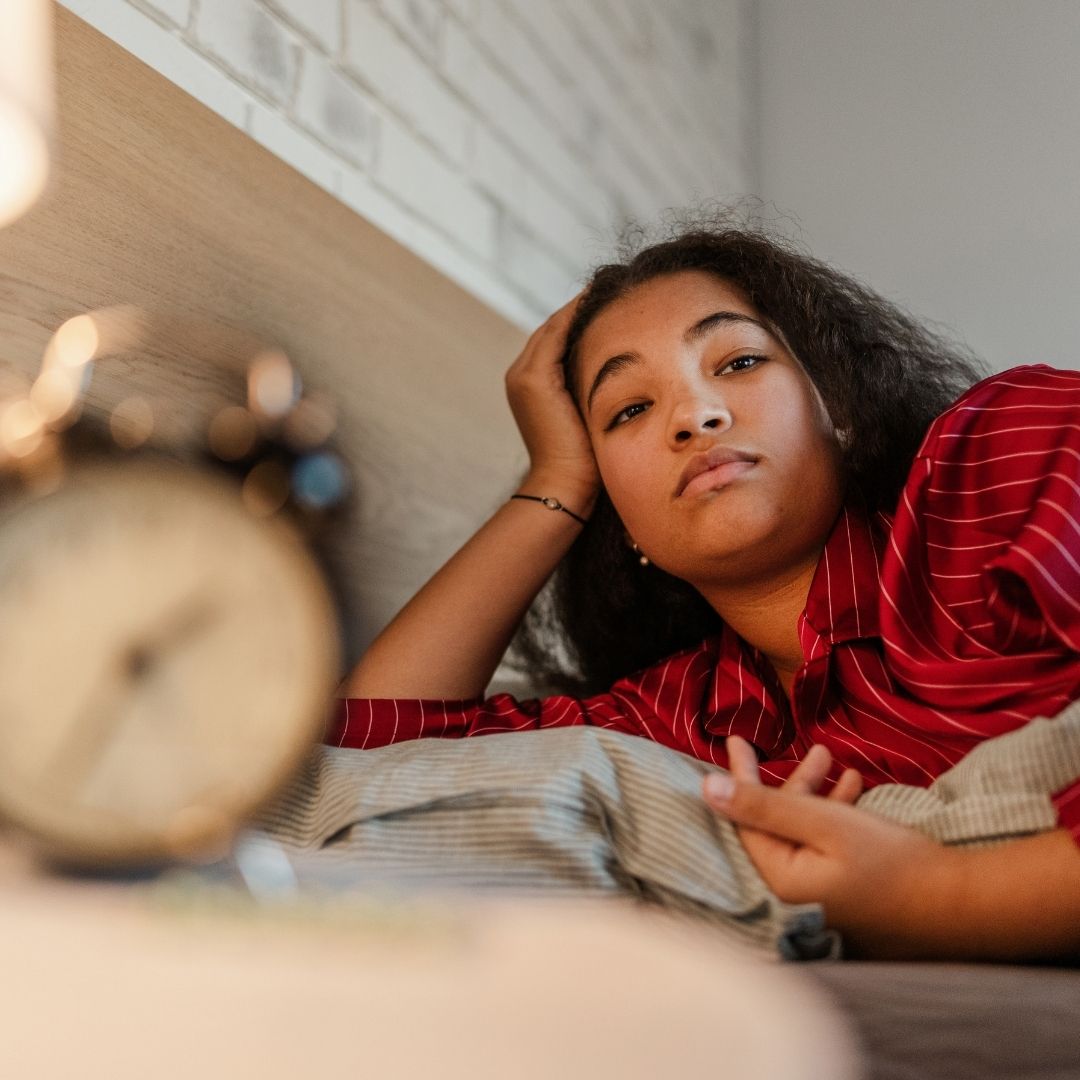
Why PMOS and Poor Sleep Often Go Together
If you have PMOS and regularly wake feeling as though you have barely slept, struggle with afternoon energy crashes, or find your cravings noticeably worse after a bad night, you know that it has got something to do with your condition.
Sleep might sometimes feel like an optional extra in PMOS management: you’re already working on eating well, exercising, managing stress. But research increasingly suggests that sleep and PMOS are more closely connected than we once thought. Women with PMOS appear to experience more sleep problems, and one condition in particular, obstructive sleep apnoea, is important enough to be highlighted in the International Evidence-Based Guideline for PMOS.
At the same time, poor sleep can influence glucose regulation, appetite, mood and energy, all of which may already be challenging when you have PMOS.
So, what is actually going on?
PMOS and Sleep: More Connected Than We Realised
PMOS, previously known as PCOS, is not simply a condition of the ovaries. It involves a complex interaction between reproductive hormones, metabolic health and wider body systems.
A 2025 systematic review and meta-analysis examining obstructive sleep apnoea in women with PCOS found a substantially higher prevalence than in women without the condition. Across the studies included, around 37% of women with PCOS met the criteria for obstructive sleep apnoea, compared with around 6% of controls.
That is a striking difference.
It does not mean that 37% of everyone with PMOS has sleep apnoea. The studies differed considerably and some involved selected groups of women. However, the association is strong enough that it should not be ignored.
Research has also identified possible differences in sleep quality and circadian rhythm in PMOS, including changes in sleep efficiency and some hormonal markers involved in the sleep-wake cycle. This is interesting, but the science is still developing.
But we now know that sleep deserves a place alongside nutrition, movement and metabolic health when we think about PMOS.
The Blood Sugar Connection
One reason sleep matters is its effect on glucose regulation.
Experimental studies have shown that restricting sleep can reduce insulin sensitivity. This may be particularly relevant in PMOS because insulin resistance is already common.
When cells become less responsive to insulin, the body needs to produce more of it to manage blood glucose effectively. Insulin also interacts with ovarian androgen production, which is one reason metabolic and reproductive features of PMOS are so closely linked.
This does not mean that a couple of late nights will suddenly make your PMOS worse. Human physiology is far more complicated than that. But, if you are working hard on your food and movement while regularly only getting five or six hours sleep, or spending eight hours in bed but waking repeatedly, sleep may be an overlooked part of the picture.
Why Cravings Can Feel Worse After a Bad Night
Have you noticed how differently you want to eat when you are exhausted? After a poor night's sleep, the breakfast you planned can suddenly seem far less appealing than a large coffee and something sweet.
That is not simply a lack of willpower.
Sleep restriction can influence appetite, food reward and food intake, although the mechanisms are more complicated than social media sometimes suggests.
You may have heard that poor sleep automatically raises the hunger hormone ghrelin and lowers leptin, the hormone involved in satiety. In reality, studies have produced inconsistent results. Poor sleep can certainly affect how and what we eat, but changes in these two hormones do not explain everything.
There are also very practical reasons. When you are exhausted, shopping, cooking and making considered choices all require more effort. Highly palatable convenience foods become more tempting. You may rely on more caffeine to get through the afternoon, which can then interfere with the next night's sleep.
This can create an unhelpful cycle:
Poor sleep → less energy → more reliance on caffeine and convenience foods → harder appetite regulation → another disrupted night.
Rather than responding by becoming stricter with your diet, it can be more useful to ask why you are sleeping badly in the first place.
Could It Be Sleep Apnoea?
This is perhaps the most important part of the conversation.
Obstructive sleep apnoea, or OSA, occurs when the upper airway repeatedly narrows or closes during sleep. Breathing becomes restricted or briefly stops, and the brain repeatedly moves the body into lighter sleep so that normal breathing can resume. You may therefore spend seven or eight hours in bed and still wake feeling completely unrefreshed.
The International Evidence-Based Guideline states that women with PMOS have a higher prevalence of obstructive sleep apnoea than women without PMOS, independent of BMI.
That last point matters.
Higher body weight is a recognised risk factor for sleep apnoea, but someone should not automatically be assumed to be too slim or otherwise “not the type” to experience it. The guideline recommends assessment when snoring occurs alongside symptoms such as waking unrefreshed, daytime sleepiness or fatigue.
Other possible signs include witnessed pauses in breathing, waking choking or gasping and morning headaches.
If several of these sound familiar, particularly snoring combined with daytime tiredness or unrefreshing sleep, it is worth discussing with your GP rather than assuming fatigue is simply another PMOS symptom you have to live with.
Diagnosis requires proper medical assessment, often including a sleep study.
What About Hormones and Sleep?
Researchers are also exploring how androgens, insulin, body composition, mood and sleep may interact in PMOS.
Melatonin is one of the hormones involved in regulating the sleep-wake cycle, and differences in melatonin patterns have been reported in PMOS research.
This does not mean everyone with PMOS needs to take melatonin. In the UK, melatonin is a prescription-only medicine, and current evidence does not support treating altered melatonin as a routine nutritional problem in PMOS.
It is more useful to see sleep as part of a wider network. Hormonal, metabolic, psychological, environmental and behavioural factors can all influence how well we sleep.
Where Can You Start?
Fortunately, supporting better sleep does not require an elaborate “hormone reset”.
Start with consistency. Going to bed and getting up at roughly similar times helps reinforce the body's sleep-wake rhythm.
Morning daylight is useful too. Natural light provides an important signal to the brain that daytime has begun, which is particularly relevant as mornings become darker in autumn.
Next, look at caffeine. If a bad night means coffee at breakfast, another at 11am and another after lunch, caffeine can gradually become part of the next night's problem. If you are sensitive to it, try moving your last caffeinated drink earlier.
Make sure you are eating enough as well. Going to bed ravenously hungry because you have spent the day restricting food is unlikely to help. Regular meals containing good-quality protein, fibre-rich carbohydrates, vegetables and healthy fats can support steadier daytime energy.
Regular movement can support sleep as well as metabolic health, although very intense exercise late in the evening does not suit everyone.
Most importantly, look beyond sleep hygiene if you remain exhausted.
Perfect blackout blinds and a carefully designed bedtime routine will not fix obstructive sleep apnoea. Nor will they address iron deficiency, thyroid problems, restless legs, significant anxiety or another underlying cause of persistent fatigue.
Sometimes the right next step is not another supplement. It is asking whether something needs investigating.
The Bigger Picture
Good sleep will not cure PMOS, and nobody should feel that their symptoms exist because they have failed to perfect their bedtime routine.
But sleep is not a luxury either.
If we only talk about food, weight and exercise, we miss an important part of metabolic and hormonal health.
For some women, small changes to sleep routines may make a noticeable difference to how they feel during the day. For others, the most valuable step may be recognising that persistent fatigue, snoring or unrefreshing sleep deserves proper investigation.
So, if you feel as though you are doing “all the right things” for your PMOS but are still exhausted, perhaps the next question is not what else you need to remove from your diet.
It might simply be: How well are you actually sleeping?
And don’t forget, you can always book a free call with us here, if you’d like to discuss further.







For any conditions other than PMOS, please feel free to be in touch with our sister clinic Alex Allan Nutrion
PMOS Clinics is part of the Green Leaf Company (London) Ltd, a limited company registered in England and Wales. Registered number: 10990293
Disclaimer: ‘Please note that nutritional therapy is not medical advice - this should always be sought from your doctor or other medical provider. We aim to work alongside your doctor or GP to provide nutritional and lifestyle advice to support any underlying imbalances.'
Website by Phuse Media - Web Design Southend
