
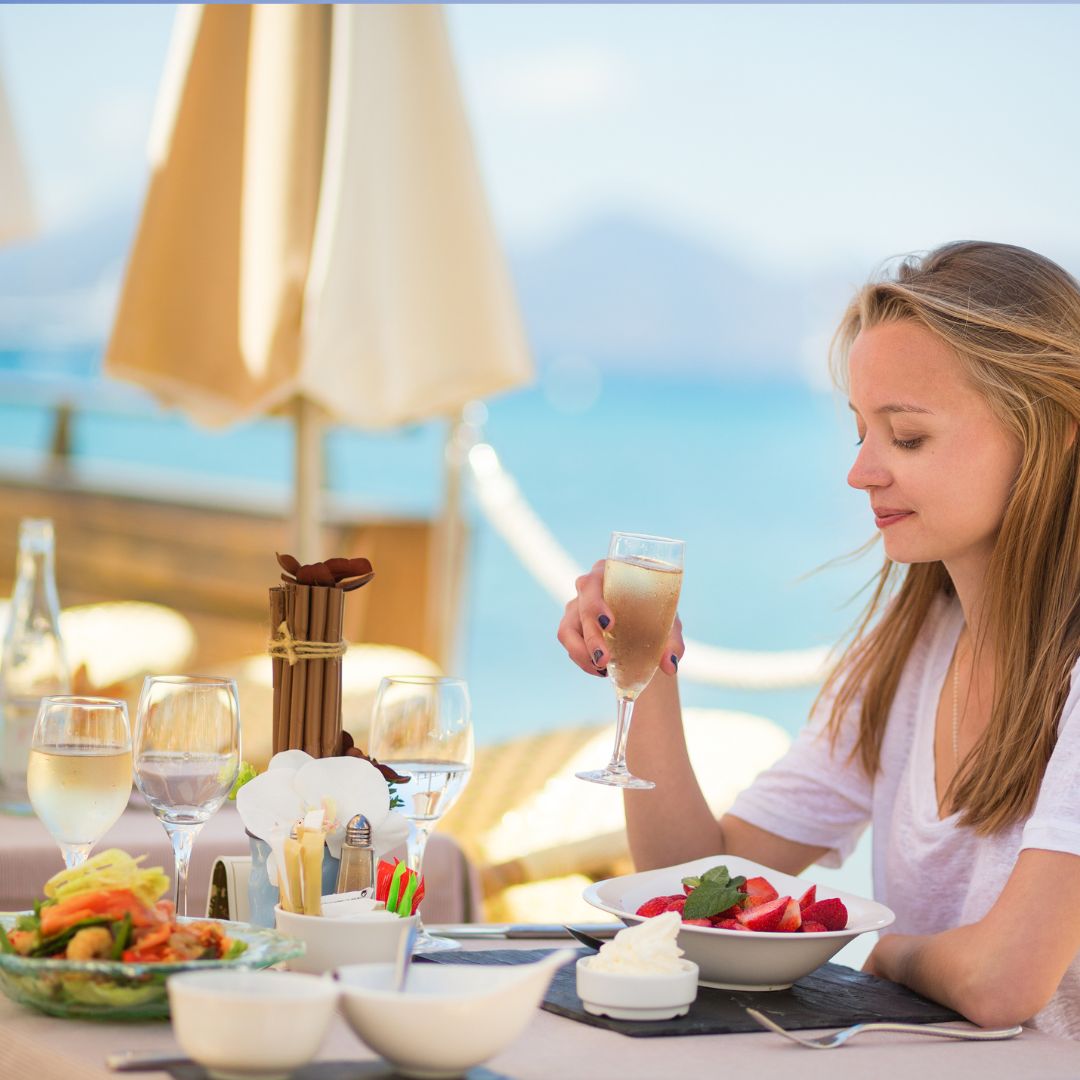
Eating Out on Holiday with PMOS
How to Enjoy Food Without the Blood Sugar Rollercoaster
Eating out on holiday should feel enjoyable! But if you live with PCOS / PMOS, restaurant meals, hotel buffets and social eating can sometimes feel more complicated than they should. You may want to relax and enjoy yourself, but you may also worry about bloating, cravings, energy dips, feeling out of control around food, or undoing the progress you have made at home.
This can create an incredibly exhausting internal dialogue. Should I have the bread? Is pasta a bad idea? Will dessert make my cravings worse? Should I skip breakfast because dinner will be bigger? What if there is nothing I can eat?
If this sounds familiar to you, please rest assured you are not alone.
PMOS is closely linked with metabolic health, insulin resistance, appetite regulation, inflammation, mood and stress physiology. This means that when your holiday brings weird mealtimes, disrupted sleep, a bit more alcohol than usual, low protein intake, and loooong gaps between meals this can throw a wobbler for your symptoms. But that doesn’t mean you have to follow strict food rules on holiday – it’s about getting the mix right.
By understanding how to build meals that support blood sugar, digestion and energy, this should give you the flexibility to enjoy restaurants, local food and social occasions. Which is what a holiday should be!
Why Holiday Meals Can Feel Difficult with PMOS
Many women with PMOS feel better when meals are regular, balanced and protein-rich. Travel and holidays often disrupt exactly these foundations.
You may eat breakfast later than usual, drink more coffee, walk more than expected, have a lighter lunch, then eat a much larger dinner late in the evening. You may have more alcohol, fewer vegetables, more refined carbohydrates and a different sleep pattern. None of this is “wrong”, but it can make symptoms feel less stable.
For some women, this shows up as cravings. For others, it is bloating, reflux, fatigue, anxiety, low mood, poor sleep or waking up feeling puffy and sluggish.
This is not simply about willpower. When blood sugar becomes a rollercoaster, the body naturally looks for quick energy. If you have eaten very little protein during the day, or have relied mainly on coffee, pastries, crisps, bread or sweet snacks, it is understandable that your appetite may feel stronger by the evening.
This is why skipping meals to “save calories” before a restaurant dinner often backfires. You may arrive too hungry, eat more quickly, crave more sugar or alcohol, and then feel uncomfortable afterwards. A more supportive approach is to eat normally earlier in the day, especially including protein, then enjoy your meal from a calmer place.
The Plate Structure That Helps Without Feeling Restrictive
A helpful PMOS-friendly meal does not need to be low carb, joyless or complicated, I promise you.
A good starting point is to think about protein, fibre-rich carbs, healthy fats and colour. This structure helps meals feel more satisfying and can support steadier energy.
In a restaurant, this might look like fish with potatoes and veggies, chicken with rice and salad, eggs with sourdough and avocado, Greek yoghurt with berries and seeds, tofu with noodles and vegetables, or a bean-based dish with olive oil and a side salad if you tolerate legumes well.
The point is not to avoid carbs. Carbohydrates can absolutely fit within a PMOS-supportive diet. The issue is often how they are eaten. A large plate of refined carbohydrates on its own may affect you differently from the same carb eaten alongside protein, veggies and healthy fats.
For example, pasta with seafood, vegetables and olive oil may feel more stable than a plain bowl of pasta followed by dessert after skipping lunch. Pizza with salad and protein may feel better than pizza eaten very late after a day of coffee and snacks. Bread at the table may be fine when it is part of a balanced meal but may not feel so good if it becomes the whole meal.
This is where holiday food can become more flexible. You are asking, “How can I make this work better for my body?” rather than “Is this allowed?”
Buffets, Breakfasts and Restaurant Menus
Hotel breakfasts can be either very helpful or a blood sugar rollercoaster waiting to happen.
The classic holiday breakfast of pastries, toast, juice and coffee may taste lovely, but for many women with PMOS it does not keep energy steady for long. You may feel hungry again quickly, crave more sugar by mid-morning, or find that your mood and concentration dip.
A more supportive approach is to start with protein. Eggs, Greek yoghurt, smoked salmon, cheese, nuts, seeds, tofu, beans or a protein-rich smoothie can help create a steadier foundation. You can then add carbs you enjoy, such as oats, sourdough, fruit or potatoes, plus colour from vegetables or berries where available.
This does not mean avoiding the pastry. It may simply mean not making the pastry the whole breakfast. Having a croissant after eggs and fruit may affect you differently from having a croissant and coffee on an empty stomach.
At buffets, it can help to do a quick scan before filling your plate. Choose your protein first, then add plants, then add the carbohydrate you genuinely want. This tends to work better than starting with everything that looks tempting and ending up with a plate that is very heavy but not very satisfying.
Restaurant menus can be approached in the same way. Look for the protein anchor first. This might be fish, seafood, chicken, lean meat, eggs, tofu, beans, lentils or yoghurt-based dishes. Then think about what you can add for fibre and colour: vegetables, salad, fruit, herbs, legumes, wholegrains or potatoes.
If the menu is mostly pizza, pasta or bread-based dishes, that is not a disaster. Choose something you will enjoy and add what you can. A side salad, vegetables, seafood, chicken, cheese, yoghurt dip or olive oil can all help make the meal feel more balanced.
Alcohol, Desserts and Food Guilt on Holiday
Alcohol and desserts often bring up guilt for women with PMOS.
But guilt is not a useful health strategy, and we shouldn’t have to put up with it! Guilt tends to increase that all-or-nothing thinking, which can make food feel more chaotic and give us a case of the ‘sod its’.
Alcohol can affect sleep and blood sugar regulation. And for some of us it can worsen cravings the next day, especially if combined with a late night and poor sleep. Working out your pattern and what works for you is a great strategy.
So, for example, if you drink alcohol with food rather than on an empty stomach, you might feel a whole lot better and be able to enjoy the local cocktails. Think about alternating alcoholic drinks with water, or avoiding the very sugary mixers, if they don’t suit you. Think about choosing to have an earlier night when you feel a little run down. For some of us, keeping alcohol moderate is one of the biggest factors in maintaining better energy and mood on holiday.
Desserts can also fit - always. If you want dessert, have dessert! A helpful approach is to enjoy it after a balanced meal (ie plenty of protein, fibre and healthy fats) rather than using it to fill the gap left by under-eating all day. If you know very sweet foods can trigger cravings for you, sharing a dessert, choosing something with protein or fat such as yoghurt, nuts or cheese, or simply slowing down and eating it mindfully may help.
The key is to avoid the “I’ve blown it” mindset. One meal, one dessert or one cocktail does not undo your health. The body responds to patterns, not isolated moments.
Eating Out Without Losing Trust in Yourself
Many women with PMOS have spent years being given weight-focused, restrictive or oversimplified, terrible advice. This can make holiday eating feel incredibly emotionally loaded.
You may worry that if you relax, you’ll lose control. You may feel guilty for eating foods you enjoy. You may compare your choices to other people’s. You may feel anxious in photos, swimwear or group meals.
This matters because stress itself can affect digestion, appetite and blood sugar regulation. A supportive PMOS approach should not increase shame. It should help you feel more confident in your body and more capable of making choices that work for you.
What can be helpful is to choose a few flexible principles rather than rigid rules. You might decide that you will aim for protein at breakfast, water through the day, vegetables when they are available, and a walk after dinner when it feels enjoyable. That is enough. You do not need to track, compensate or make every meal perfect.
If a meal is less balanced, the next meal can simply bring you back to your foundations. No drama. No punishment. No starting again on Monday.
A Simple PMOS-Friendly Eating Out Strategy
Before you go away, think about the part of holiday eating that usually feels hardest.
If breakfast is your weak point, plan a protein-rich option. If you get over-hungry before dinner, pack a snack or eat a proper lunch. If alcohol affects your sleep and cravings, decide what moderation looks like for you. If buffets overwhelm you, start with protein and plants before adding extras. If desserts trigger guilt, practise enjoying them without turning them into a moral issue.
This is not about controlling your holiday. It is about reducing the blood sugar rollercoaster so that you feel more stable, more energised and more relaxed around food. And then you can really enjoy your time away!
PMOS nutrition should support your life, not shrink it.
If eating out, cravings, food guilt or blood sugar dips feel difficult to manage, there may be deeper foundations to look at, including insulin resistance, sleep, stress, gut health, appetite regulation and your relationship with food.
You do not have to work all of this out alone. Why not get in touch with us?







For any conditions other than PMOS, please feel free to be in touch with our sister clinic Alex Allan Nutrion
PMOS Clinics is part of the Green Leaf Company (London) Ltd, a limited company registered in England and Wales. Registered number: 10990293
Disclaimer: ‘Please note that nutritional therapy is not medical advice - this should always be sought from your doctor or other medical provider. We aim to work alongside your doctor or GP to provide nutritional and lifestyle advice to support any underlying imbalances.'
Website by Phuse Media - Web Design Southend
