

Food Noise, Cravings and PMOS: Why Willpower Isn't the Answer
Do you think about food far more than you would like to?
Perhaps you have only just finished lunch and are already planning what comes next. Perhaps there is a running commentary in the background of your day: what you have eaten, what you should not eat, what is in the cupboard, whether you have been "good".
For years, many women with PMOS, previously known as PCOS, have assumed this was simply a personal failing.
There is now a name for it: food noise. And the fact that it is being named, measured and researched tells us something important.
What Is Food Noise?
Food noise is not a medical diagnosis. The phrase came from patients, particularly people who had started taking GLP-1 medicines and noticed that the constant chatter about food had gone quiet.
Researchers have since tried to pin it down. One group described it in 2023 as a heightened and persistent reaction to food cues, often leading to intrusive thoughts about food. Another, in 2025, defined it as persistent thoughts about food that are unwanted or distressing and that may cause harm, whether social, mental or physical.
The important words are persistent and unwanted.
Wondering what to cook at five o'clock is not food noise. Nor is enjoying food or looking forward to a meal out. Food noise is when the thoughts keep coming, are not welcome and get in the way of everything else.
This is a young area of science. The first questionnaires designed to measure food noise were only published in 2025, and to my knowledge it has not yet been measured directly in women with PMOS.
Hunger, Cravings and Food Noise Are Not the Same
It helps to separate three things that often get lumped together.
Hunger is the body's need for energy. A craving is an intense desire for a particular food. Food noise is the persistent mental preoccupation that can sit behind both, and it can be present even when you are not physically hungry at all.
That is why "just eat when you're hungry" is such unhelpful advice for some people.
Why Might This Matter in PMOS?
Although food noise itself has not been studied in PMOS, its close relatives have.
In a UK survey of women with PCOS, food cravings were common, and 60% of the women who were also living with obesity were categorised as having binge-eating behaviour. This was an online survey, so it may over-represent those who struggle most, but the numbers are striking.
A 2024 meta-analysis went further. Drawing on 20 studies and almost 29,000 women with PCOS, it found roughly double the odds of binge eating disorder compared with women without the condition, and higher odds of bulimia nervosa. Disordered eating scores were higher in women with PCOS regardless of body weight.
Why might this be?
As we explored at the start of the month, insulin resistance, differences in how fullness signals respond after meals, poor sleep and chronic stress can all influence appetite. Add years of being told to eat less and lose weight, often without much support, and it is not hard to see how food becomes a preoccupation.
Why Willpower Isn't the Answer
Willpower assumes that the problem is a decision.
But the brain's response to food cues is largely automatic. The sight, smell or even the thought of food can trigger wanting before any conscious choice has been made. How strongly that happens varies between people, and it is shaped by hunger, sleep, stress, biology and the food environment around us.
Strict rules can turn the volume up as well. Experimental studies suggest that when people are asked to avoid a particular food for a short time, cravings for that food tend to increase, especially in those already prone to cravings. Trying hard not to think about something is a reliable way of thinking about it more.
The picture is not completely one-sided. In longer, structured programmes, cravings often reduce over time. But it does help to explain why another round of cutting things out so often makes the noise louder, not quieter.
How GLP-1 Medicines Changed the Conversation
You will have seen the headlines.
GLP-1 medicines mimic the gut hormone we met earlier this month. They act on the gut and on areas of the brain involved in appetite and reward. In a two-year trial, people taking one of these medicines reported fewer cravings and found them easier to resist than people taking a placebo. This was an exploratory analysis in a subgroup of participants, so it is a signal and not the final word.
What interests me most is not the medicines themselves, but what they have revealed.
When a treatment that acts on appetite pathways quietens thoughts about food, it becomes very difficult to argue that those thoughts were ever a character flaw. That has helped to move the conversation from blame towards biology, and many women have found that a relief in itself.
Some context matters here. These are prescription-only medicines with specific eligibility criteria and potential side effects. NICE is clear that they should be used alongside support with nutrition and physical activity, and the International Evidence-Based Guideline says they may be considered in PMOS in line with general population guidance, weighing up benefits and side effects. The MHRA advises that they should not be used during pregnancy, when trying to conceive or while breastfeeding, and that they should only be obtained through a registered prescriber and pharmacy.
Whether they are appropriate for you is a conversation for your GP or specialist. It is not something I can advise on.
What Can Help Turn the Volume Down?
Food and lifestyle changes do not work in the same way as a medicine, and I would be cautious about any product that claims to.
What they can do is address some of the things that amplify food noise.
Eating enough, and eating regularly, matters more than most people expect. Food thoughts tend to be louder when the body is under-fuelled. Meals built around protein, fibre and plenty of vegetables, as we covered in the top tips blog, give fullness signals the best chance of being heard.
Sleep and stress deserve attention too, because both can make food more rewarding and harder to resist.
Your surroundings count. If the trigger is a cue, changing the cue is usually easier than resisting it. Moving the biscuits out of sight is not weakness. It is sensible design.
And loosening rigid food rules, ideally with support, often does more to quieten things than tightening them.
When to Seek More Support
Please speak to your GP if you recognise any of the following:
Eating disorders are treatable. The charity Beat offers information and helplines.
The Bigger Picture
Food noise is not evidence that you are greedy, weak or broken.
It is what happens when appetite biology, a food environment designed to grab attention and years of dieting messages meet in one person. PMOS can add to that load.
So perhaps the question is not "Why can't I just stop thinking about food?"
It might simply be: what is turning the volume up, and what support would help to turn it down?
This article is for educational purposes only and is not a substitute for medical advice. BANT-registered nutrition practitioners do not diagnose or treat medical conditions, nor do they prescribe or alter medication. Always consult your GP before making any changes to your medications or supplements.
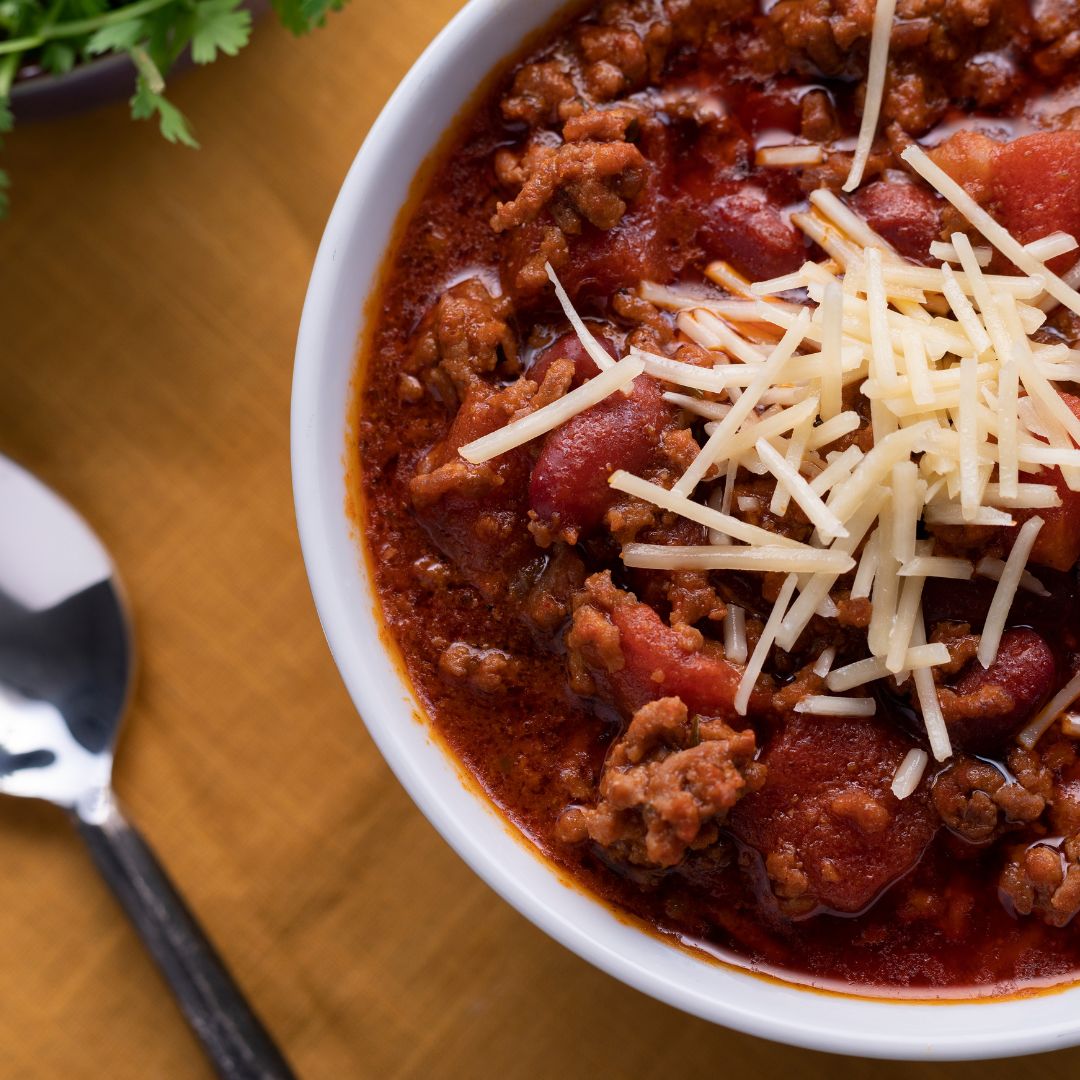
Smoky Turkey and Black Bean Chilli
November calls for a pot of something warming on the hob. This smoky chilli combines turkey thigh mince and black beans with butternut squash and cavolo nero, and lets smoked paprika, cumin and chipotle do the heavy lifting on flavour.
It also brings together everything we have talked about this month on appetite and PMOS, previously known as PCOS. Each serving provides around 33g of protein and 14g of fibre, with plenty of vegetables and a bowl generous enough to feel like a proper meal. It batch cooks beautifully too, which helps on the evenings when hunger arrives before the energy to cook.
Serves 4
Ingredients
To serve
Method
The chilli keeps for up to three days in the fridge and freezes well. Reheat until piping hot throughout.
Vegetarian Alternative
Leave out the turkey and use vegetable stock. Increase the black beans to three tins or use two tins of black beans and one of kidney beans, and add a 250g pouch of ready-cooked Puy lentils at the same time as the beans.
Top each bowl with the Greek yoghurt and a tablespoon of pumpkin seeds. Served this way, the vegetarian version provides around 31g of protein and 22g of fibre per serving.
That is a generous amount of fibre for one meal. If your usual intake is low, start with a smaller portion and build up.
Why This Works Well for PMOS
This is the template from last week's blog in a single pan.
The turkey and black beans provide most of the protein, with a little more from the Greek yoghurt on top. Turkey thigh mince has more flavour than breast and stays tender through a long simmer. If your pack is 500g, use it all and the protein rises to around 37 g per serving.
The beans, squash, carrots and greens provide the fibre: about 14g per serving, which is just under half of the 30g a day the NHS recommends for adults.
The vegetables, tomatoes and stock add volume, so the bowl is generous without being heavy. Olive oil and yoghurt add some fat, and there is plenty here to chew.
The carbohydrate comes mainly from beans and squash, eaten alongside protein, fibre and fat. If you would like more, a small portion of brown rice or a baked sweet potato sits well alongside.
If you’ve enjoyed this recipe, why not check out some of our other PMOS-friendly recipes over in the Recipe Index?
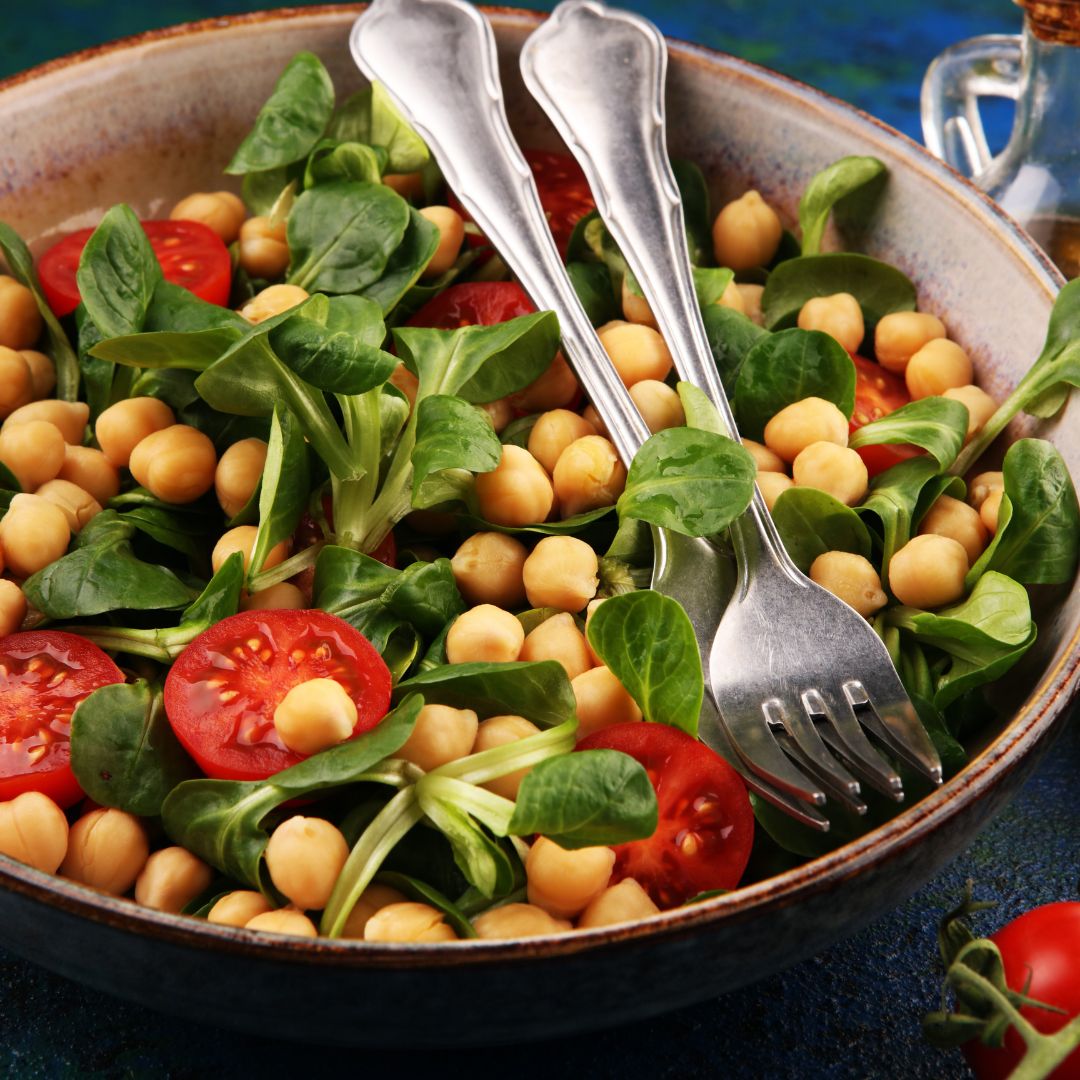
How to Build Meals That Actually Keep You Full
If you have PMOS, previously known as PCOS, and your meals never quite seem to hit the spot, the usual advice is to eat less and try harder.
I would like to suggest something different: build your meals better.
As we saw in the last blog, hunger in PMOS has a biological basis. The encouraging part is that the way a meal is put together can influence how satisfying it is, and none of this requires weighing food or cutting out whole food groups.
It is worth saying that the International Evidence-Based Guideline does not recommend one particular diet for PMOS, because no single eating pattern has been shown to be better than the rest. So, think of these as building blocks, not rules.
Here are eight places to begin.
1. Give Protein a Proper Place at Every Meal
Protein is generally the most filling of the three macronutrients. A review of the research suggested that meals providing around 25 to 30g of protein are associated with better appetite control than lower-protein meals.
Breakfast is where most of us fall short. Toast and jam, or a bowl of cereal, provides very little.
In practice, 25 to 30g looks roughly like a chicken breast or salmon fillet, a tin of tuna, two eggs alongside a pot of Greek yoghurt, or a generous portion of tofu, lentils and beans combined. You do not need to hit a number precisely. The aim is simply that protein is a main feature of the meal and not an afterthought.
If you have kidney disease, check with your doctor before increasing your protein intake.
2. Add Fibre - and Add It Gradually
The NHS recommends 30g of fibre a day for adults. Most of us manage around 20g.
Fibre adds bulk and slows digestion. Viscous fibres, such as those in oats, beans and lentils, form a gel in the gut that slows the rate at which food leaves the stomach.
The research on fibre and fullness is more mixed than you might expect, and the effect seems to depend on the type of fibre and the food it comes in. That is one reason I would always choose beans, lentils, oats, vegetables, seeds and whole fruit over a fibre supplement sprinkled on an otherwise low-fibre meal.
If your current intake is low, increase it slowly and drink plenty of fluid.
3. Use Volume to Your Advantage
Your stomach responds to how much food arrives, not only to how much energy it contains.
Foods with a high water and fibre content, such as vegetables, soups, stews and fruit, provide more food for the same energy. Studies from Professor Barbara Rolls' laboratory have repeatedly shown that people feel just as satisfied after meals with a lower energy density, and that starting with a vegetable soup or salad tends to reduce how much is eaten at that meal overall.
This is not about replacing dinner with a plate of lettuce. It is about making vegetables a generous part of the plate, which is easy in November when soups, stews and roasted roots are exactly what we want to eat.
4. Include Fat, but Do Not Rely on It Alone
Fat slows stomach emptying, prompts the release of gut hormones involved in fullness and makes food taste good. Satisfaction matters, and a fat-free meal is rarely a satisfying one.
But fat is also energy dense and, calorie for calorie, less filling than protein or fibre. In a classic study that compared 38 common foods, those higher in protein, fibre and water were the most filling, while fattier foods were the least. Boiled potatoes came top. Croissants came bottom.
So, include olive oil, nuts, seeds, avocado and oily fish as part of a meal. They work best alongside protein and fibre, not instead of them.
5. Give Your Meal a Structure
A useful template is protein, a fibre-rich carbohydrate, plenty of vegetables and some fat.
Notice that carbohydrate is still on the plate. You do not need to remove it. Eating carbohydrate together with protein, fibre and fat slows digestion and tends to produce a steadier rise and fall in blood glucose, which may help with that familiar dip in energy and return of hunger a couple of hours later.
Porridge made with milk and topped with Greek yoghurt, seeds and berries is a different meal from porridge made with water and honey.
6. Avoid Enormous Gaps
There is no magic number of meals a day, and the evidence on meal frequency is genuinely mixed.
However, if you have run on coffee until two o'clock, arriving at lunch ravenous is not a character flaw. It is a predictable biological response. When we are very hungry, we eat faster, choose differently and find it much harder to notice when we have had enough.
Most people do well with three meals, plus a planned snack when a gap is going to stretch much beyond four or five hours. Oatcakes with hummus, yoghurt with berries, or an apple with nut butter all work well.
7. Chew Your Food More Often Than You Drink It
Liquids are generally less filling than solids.
In one study, 58 adults were given apple in different forms before lunch. Whole apple was more filling than apple purée or apple juice, even when fibre was added back to the juice, and people who ate the whole apple consumed 15% less at lunch overall than when they had nothing beforehand.
A meta-analysis of food texture came to a similar conclusion, and a systematic review found that more chewing reduced self-reported hunger.
This does not mean a smoothie is never appropriate. One made with protein and fibre can be useful when time or appetite is short. Just be aware that it may not hold you for as long as a meal you chew. The NHS suggests keeping fruit juice and smoothies to a combined 150ml a day.
Slowing down helps too. You do not need to count chews. Sitting down and putting your cutlery down between mouthfuls is plenty.
8. Notice Hunger Versus Habit, Gently
Not all eating is driven by hunger. Grazing can be a response to tiredness, boredom, stress or simply the biscuit tin being where it always is.
Physical hunger tends to build gradually, and most foods sound appealing. A habit or craving often arrives suddenly, is usually for something specific and tends to be tied to a time, a place or a feeling.
When you find yourself reaching for something, try a brief pause and a single question: am I hungry, or is this something else? If you are hungry, eat. If you are tired, stressed or bored, it is worth asking what you actually need.
This is curiosity, not a test you can fail.
If you notice that you are monitoring every mouthful, feeling anxious or guilty about eating, or regularly eating in a way that feels out of control, please speak to your GP. Disordered eating is more common in PMOS and it deserves proper support. The eating disorder charity Beat also has a helpline.
Start with One Thing
You do not need to rebuild every meal tomorrow.
Choose the tip that sounds most like you.
If breakfast is toast and coffee, add protein. If lunch is a meal deal eaten at your desk in four minutes, sit down and slow down. If there are seven hours between lunch and dinner, plan a snack. If vegetables only appear in the evening, add some to lunch.
The aim is not a perfect plate.
It is meals that leave you comfortably satisfied, so that food takes up a little less room in your head for the rest of the day.
Next week I will be sharing a smoky turkey and black bean chilli that puts all of this into one pan.

Why Am I Always Hungry? Appetite Regulation and PMOS
You eat a perfectly reasonable breakfast at eight o'clock. By nine, you are thinking about food again. By mid-afternoon you are standing at the cupboard, cross with yourself, wondering how everyone else seems to manage until dinner.
If you have PMOS, previously known as PCOS, this may sound very familiar. Hunger that feels out of proportion, and cravings that are hard to ignore, are among the things women mention to me most often in clinic.
It is tempting to think that you simply need more willpower.
But the research tells a different story. Appetite is regulated by a network of hormones, nerves and brain circuits, and several parts of that network appear to behave differently in PMOS.
So, what is actually going on?
Hunger Is a Biological Signal
Appetite is not controlled by a single hormone, and it is certainly not controlled by a single decision.
Your gut, pancreas, fat tissue and brain are in constant conversation about how much energy has just arrived and how much is in reserve. Some signals rise and fall around meals. Others reflect longer-term energy stores. A region of the brain called the hypothalamus pulls these messages together, while the brain's reward system adds its own opinion about how appealing food looks right now.
PMOS is now understood as a condition involving several hormone systems as well as metabolism. It would be surprising if appetite were left untouched.
Insulin: More Than a Blood Sugar Hormone
Insulin resistance is common in PMOS. When cells respond less well to insulin, the body produces more of it to keep blood glucose in range.
This matters for appetite in a couple of ways.
After a meal that raises blood glucose quickly, a large insulin response can sometimes be followed by a dip in glucose a few hours later. In a study of 1,070 adults wearing continuous glucose monitors, the size of that dip two to three hours after eating predicted hunger, and how much people went on to eat, better than the height of the original peak.
That study was carried out in healthy adults, not in women with PMOS, so we need to be careful about how far we stretch it. But it does offer a plausible explanation for feeling hungry again surprisingly soon after eating.
Insulin is also one of the signals the brain uses to register that food has arrived. Researchers are still working out whether insulin resistance makes that message harder to hear.
Ghrelin: The Hunger Hormone That Does Not Follow the Script
Ghrelin is often called the hunger hormone. It rises before meals and falls once we have eaten.
You might expect ghrelin to be higher in PMOS. In fact, a meta-analysis of 20 studies found that fasting ghrelin tended to be lower in women with PCOS than in women without it, although the results varied widely between studies.
The more interesting finding may be what happens after food. In a small Australian study of overweight women, those with PCOS reported more hunger and less fullness after a test meal than those without, and the researchers concluded that the ghrelin response may be impaired.
In other words, the difficulty may be less about how hungry you are before a meal and more about how clearly the "that was enough" message lands afterwards.
Leptin: Plenty of Signal, Not Enough Response
Leptin is made by fat tissue and tells the brain about longer-term energy stores. In theory, more leptin should mean less hunger.
Several meta-analyses, including one published this year, have found higher leptin levels in women with PMOS than in women without it. Yet appetite does not fall in step. This is often described as leptin resistance: the signal is there, but the response is muted.
It is a useful idea, and it appears to be linked with insulin resistance. It is also still a working theory, not something we can measure and address directly in clinic.
GLP-1: The Fullness Messenger
GLP-1 is a hormone released by the gut after eating. It slows stomach emptying, supports insulin release and tells the brain that food has arrived.
You may have read that women with PMOS make less GLP-1. One small study in lean women with PCOS did find lower levels both before and after a meal. Other studies have found no difference, or even higher levels.
So it is too early to say that PMOS involves a GLP-1 shortfall, whatever social media suggests. I will come back to GLP-1, and to what people now call food noise, later this month.
Why Protein Keeps Coming Up
Of the three macronutrients, protein is generally the most filling. It prompts the release of several gut hormones involved in fullness, including GLP-1.
A review of the evidence suggested that meals containing around 25 to 30g of protein are associated with better appetite control. In women with PCOS specifically, a meta-analysis of eight randomised trials found that higher-protein diets lowered fasting insulin and improved a marker of insulin resistance more than balanced diets with the same calories, even though weight loss was similar.
Protein is helpful, then, but it is not magic. Next week's blog looks at how to build it into meals alongside fibre, fats and enough food overall.
Sleep and Stress Turn Up the Volume
If you read last month's blogs, you will know that poor sleep and PMOS often go together.
When researchers restrict people's sleep, they eat more the next day: around 385 kcal more on average, according to one meta-analysis. The effect on ghrelin and leptin is inconsistent, so changes in food reward and plain exhaustion probably matter just as much.
Stress pushes in a similar direction. A short, sharp stress often switches appetite off. Ongoing stress is different. In a six-month study of adults, higher chronic stress, cortisol and insulin at the start each predicted greater weight gain.
Food Reward: Hunger's Other Half
Not all appetite is about energy.
We also eat because food is rewarding, and some foods are far easier to keep eating than others. In a tightly controlled trial, 20 adults lived in a research unit and ate an ultra-processed diet for two weeks and a minimally processed diet for two weeks. The meals offered were matched for calories, sugar, fat and fibre. People ate around 500 kcal a day more on the ultra-processed diet.
Nobody in that study had less willpower in one fortnight than the other. The food changed, and appetite followed.
The Bigger Picture
None of this means your appetite is faulty, or that nothing can be done.
It means that hunger in PMOS has a physiological basis. Insulin, gut hormones, sleep, stress and the food around you are all part of the picture, and several of those can be supported with practical changes to how you eat and live.
One caution. If you are constantly hungry and also very thirsty, passing urine more often than usual, unusually tired or losing weight without trying, please speak to your GP. Women with PMOS have a higher risk of type 2 diabetes, and those symptoms deserve a blood test, not a new meal plan.
So, the next time you are hungry an hour after eating, perhaps the question is not "What is wrong with me?"
It might simply be: what is my body trying to tell me?
And don't forget, you can always book a free call with us here, if you'd like to discuss further.

Could It Be Sleep Apnoea?
Do you sleep for seven or eight hours but still wake feeling exhausted?
Perhaps you have been told that you snore. Maybe your partner has noticed you gasping in your sleep, or you regularly wake with a headache and spend the afternoon fighting to keep your eyes open.
When you have PMOS, it can be easy to put persistent tiredness down to hormones, stress, blood sugar or simply having a busy life.
But there is another possibility that deserves more attention: obstructive sleep apnoea.
Women with PMOS have a higher prevalence of obstructive sleep apnoea than women without PMOS, and the latest International Evidence-Based PMOS Guideline now specifically recommends looking for symptoms of the condition.
What Is Obstructive Sleep Apnoea?
Obstructive sleep apnoea, usually shortened to OSA, happens when the upper airway repeatedly narrows or closes while you are asleep.
Airflow may reduce temporarily, known as a hypopnoea, or stop altogether for a short period, known as an apnoea.
Your brain responds by briefly bringing you into lighter sleep so that normal breathing can resume. You may not remember these episodes in the morning, but if they happen repeatedly throughout the night, your sleep can become extremely fragmented. So, although you might technically have spent eight hours in bed, you may not have had eight hours of restorative sleep.
Typical symptoms can include:
NICE recommends considering sleep apnoea when someone has two or more features such as snoring, witnessed pauses in breathing, unrefreshing sleep, morning headaches, unexplained tiredness, choking during sleep, insomnia or problems with concentration.
Why Are We Talking About This in PMOS?
Because the association appears to be considerably stronger than many people realise.
A 2025 systematic review and meta-analysis found that around 37% of women with PCOS in the included studies had obstructive sleep apnoea, compared with approximately 6% of women without PCOS. The researchers calculated a substantially increased overall odds of OSA in the PCOS groups.
A further meta-analysis published in 2026, involving more than 230,000 participants, also found a significantly greater risk of obstructive sleep apnoea among women with PCOS.
These figures need some context. The studies differed in their populations, methods and OSA definitions, so they cannot tell us that a particular percentage of every woman with PMOS will develop sleep apnoea.
But they do tell us that this is not a fringe association.
The updated International PMOS Guideline states that healthcare professionals should be aware that women with PMOS have a significantly higher prevalence of OSA than women without PMOS, independent of BMI.
But Isn't Sleep Apnoea Mainly Associated with Being Overweight?
Higher body weight is an important risk factor for obstructive sleep apnoea, and research suggests that OSA risk within PMOS is greater in women living with overweight or obesity.
However, that is not the whole story.
PMOS itself is recognised by both the International PMOS Guideline and NICE as a condition associated with a higher prevalence of obstructive sleep apnoea.
That matters because automatically assuming that someone is “too slim to have sleep apnoea” could mean symptoms are overlooked.
Equally, someone living in a larger body should not have persistent fatigue dismissed as simply being due to their weight.
Symptoms deserve proper investigation.
Is Testosterone Responsible?
You might assume that higher androgen levels in PMOS explain the association with sleep apnoea.
The evidence is not that straightforward.
A 2025 systematic review examined sex hormones and sleep problems in women with PCOS. Women who had both PCOS and sleep apnoea had lower levels of sex hormone-binding globulin, or SHBG, than those without sleep apnoea. However, the researchers did not find significant differences in total testosterone, free testosterone, DHEAS, androstenedione or oestradiol.
In other words, we do not currently have evidence for a simple higher testosterone → sleep apnoea pathway.
PMOS, body composition, insulin resistance, metabolic health, airway anatomy and sleep physiology may all interact. More research is needed to understand exactly why OSA is more common.
Why Does Sleep Apnoea Matter?
One of the most immediate effects is simply how you feel.
Repeated sleep disruption can contribute to daytime fatigue, poor concentration, memory difficulties and changes in mood. Untreated sleep apnoea is also associated with conditions including high blood pressure and cardiovascular disease.
There is also an interesting metabolic overlap with PMOS.
A 2024 meta-analysis found that women who had both PCOS and OSA tended to have a less favourable metabolic profile than women with PCOS without OSA.
Could Your Tiredness Be a Clue?
You do not need to snore like a cartoon character to have sleep apnoea. Nor does everyone with OSA experience overwhelming daytime sleepiness. The International PMOS Guideline suggests looking particularly for snoring combined with waking unrefreshed, daytime sleepiness or fatigue.
So, consider whether any of these sound familiar:
None of these symptoms confirms sleep apnoea, but they are worth discussing with your GP.
What Happens If You Speak to Your GP?
Your GP will usually begin by asking about your sleep and symptoms.
Questionnaires such as the Epworth Sleepiness Scale or STOP-Bang may form part of the initial assessment, although questionnaires cannot diagnose sleep apnoea on their own. NICE specifically advises against relying on the Epworth Sleepiness Scale alone because not everyone with OSA experiences excessive daytime sleepiness.
If sleep apnoea is suspected, you may be referred for a sleep study.
Treatment depends on the individual and severity of the condition. It may include lifestyle changes where appropriate and, for many people, continuous positive airway pressure or CPAP, which helps keep the airway open during sleep.
Don't Assume Exhaustion Is “Just Your PMOS”
Fatigue is common and can have many causes. Iron deficiency, thyroid disorders, insufficient food intake, stress, depression, medication, insomnia and numerous other factors may all contribute.
But obstructive sleep apnoea deserves a place on that list too.
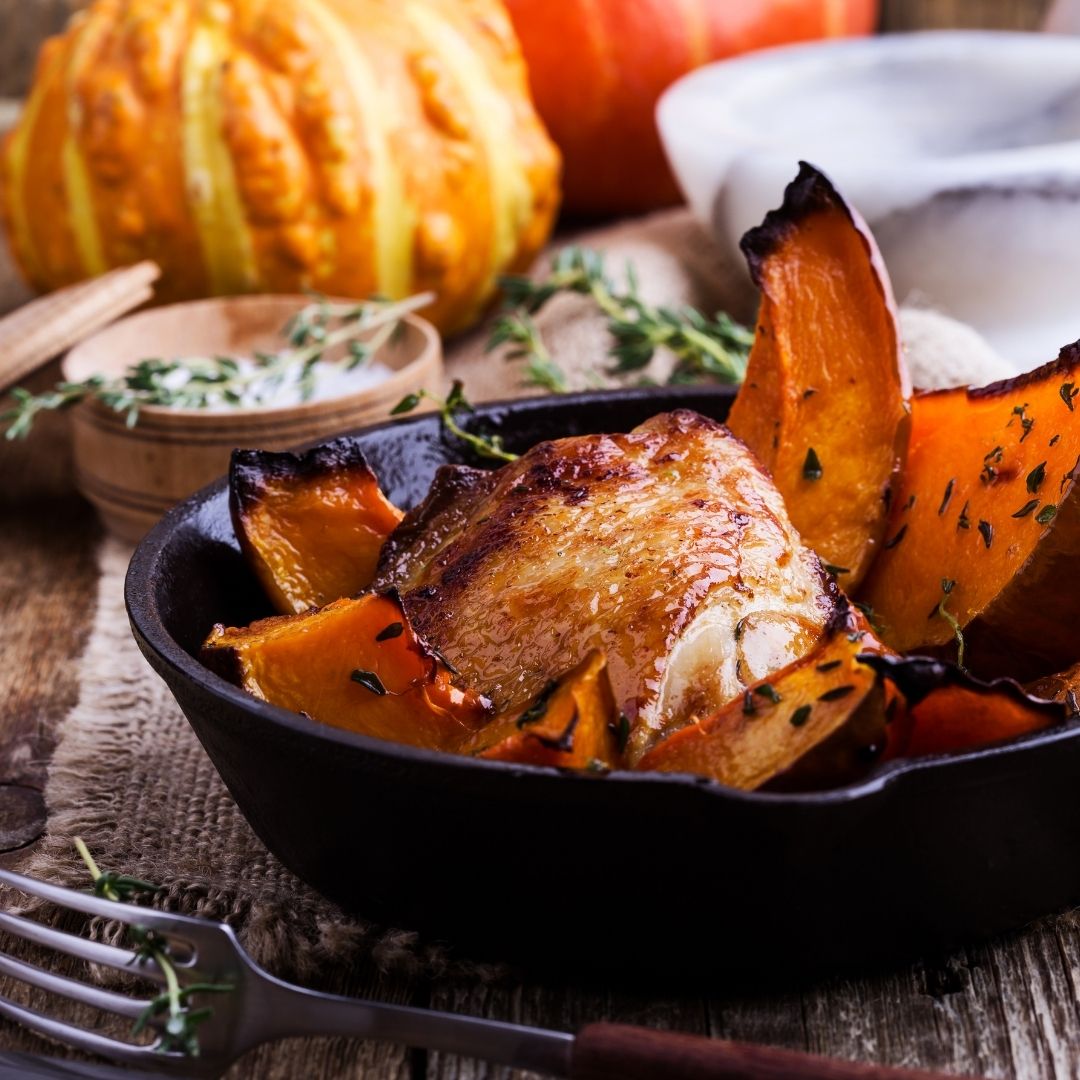
Autumn Chicken, Squash and Chickpea Traybake
This colourful autumn traybake combines protein-rich chicken and Greek yoghurt, and with fibre from chickpeas, squash and leafy greens. It makes a satisfying, balanced meal that can help support steadier energy and blood glucose regulation, both of which are particularly important in PMOS.
Chicken, yoghurt and pumpkin seeds also provide tryptophan, an essential amino acid that the body uses to make serotonin and subsequently melatonin. Melatonin is our sleep hormone, so ensuring we have the correct essential ingredients for it can be helpful.
Serves 4
Ingredients
To serve
Method
Why This Works Well for PMOS
This is a great example of what a balanced PMOS meal can look like without needing to remove carbohydrates. The chicken, chickpeas, Greek yoghurt and pumpkin seeds provide protein, helping to make the meal satisfying.
Chickpeas, squash, red onion and leafy greens also provide fibre, while extra virgin olive oil and pumpkin seeds add unsaturated fats.
The carbohydrate comes predominantly from squash and chickpeas rather than refined sources, and pairing carbohydrate with protein, fibre and fat helps slow digestion and produces a more balanced meal.
There is another interesting connection with this month's sleep theme. Chicken, Greek yoghurt and pumpkin seeds all contain tryptophan. Tryptophan is an essential amino acid that we obtain from food. In the body, it can be converted to serotonin, which can subsequently be used to produce melatonin, one of the hormones involved in regulating our sleep-wake cycle.
If you’ve enjoyed this recipe, why not check out some of our other PMOS-friendly recipes over in the Recipe Index?






For any conditions other than PMOS, please feel free to be in touch with our sister clinic Alex Allan Nutrion
PMOS Clinics is part of the Green Leaf Company (London) Ltd, a limited company registered in England and Wales. Registered number: 10990293
Disclaimer: ‘Please note that nutritional therapy is not medical advice - this should always be sought from your doctor or other medical provider. We aim to work alongside your doctor or GP to provide nutritional and lifestyle advice to support any underlying imbalances.'
Website by Phuse Media - Web Design Southend
