
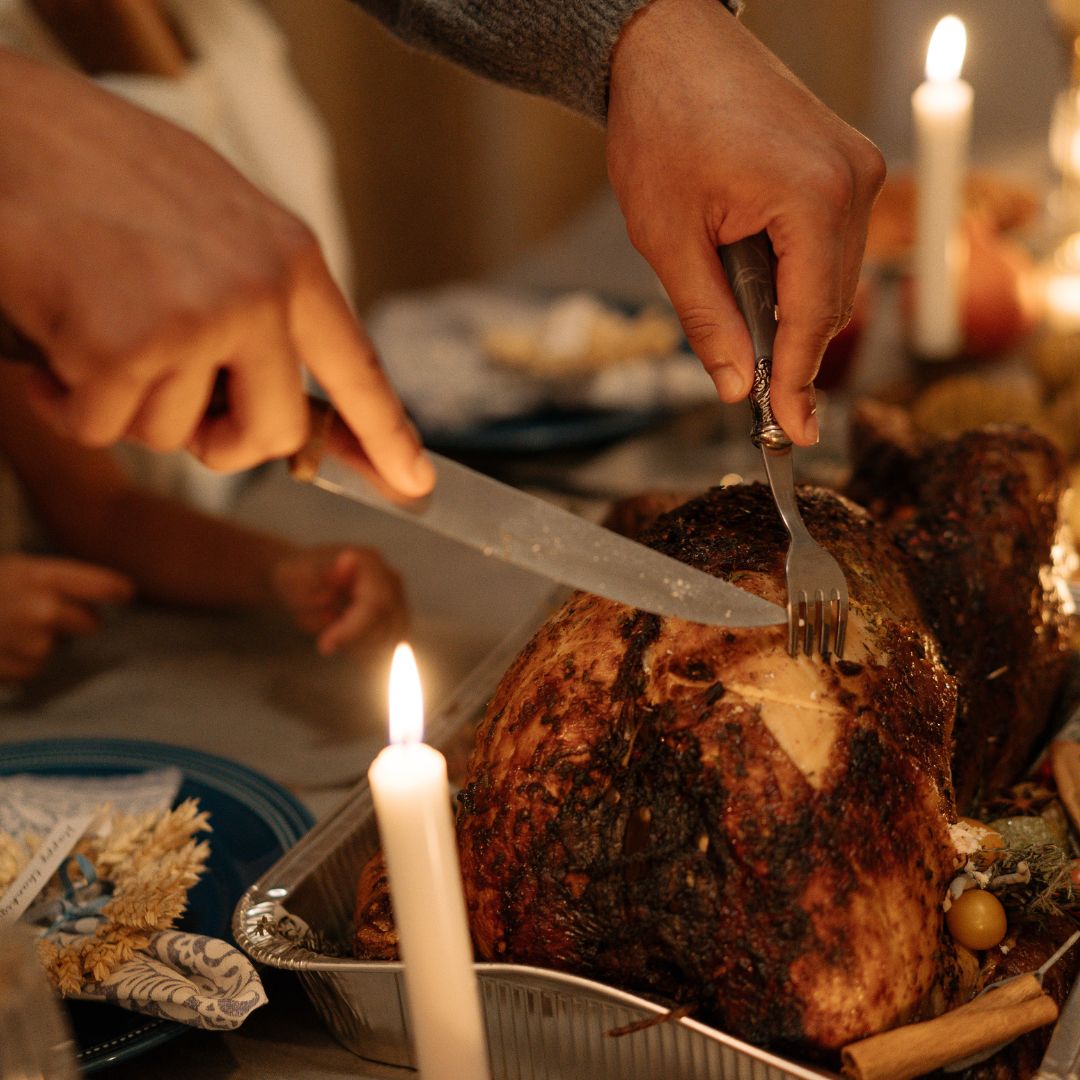
How to Enjoy Christmas with PMOS Without the Food Guilt
"I want to enjoy Christmas without feeling that I've ruined everything."
I hear some version of this every December. Women with PMOS (previously known as PCOS) often go into the festive season braced for it, as if it were something to be survived rather than enjoyed.
So, this week's tips are not about avoiding Christmas food. They are about enjoying it in a way that leaves you feeling well, and without the guilt that so often follows, and hopefully having a lovely festive season!
1. Do Not Treat Christmas as a Nutritional Emergency
Your health is shaped by what you do most of the time, not by a handful of days in December.
The International Evidence-Based Guideline for PMOS emphasises healthy eating and activity as long-term habits, with benefits even without weight loss. There is nothing in it about getting through Christmas perfectly.
A mince pie is not a setback. A roast dinner with all the trimmings is not a failure. If you go into the season with this in mind, much of the pressure and the guilt simply has less to attach itself to.
2. Keep Protein at the Centre of Your Meals
Protein is the most filling of the macronutrients, and it is often the thing that goes missing in December, when breakfast becomes a pastry, and lunch becomes whatever is on the office table.
As we covered in November, meals with around 25 to 30g of protein are associated with better appetite control. On Christmas morning, that might be scrambled eggs with smoked salmon, or Greek yoghurt with berries and nuts. At a buffet, it might mean starting with the chicken skewers, prawns or cheese before the crisps.
This is not about restriction. A good protein base simply makes it easier to enjoy the rest of the day without feeling ravenous, and helps keep your blood sugar steady.
3. Eat Before You Go Out
Arriving at a party starving rarely ends well! When we are very hungry, we eat faster, choose differently, and find it harder to notice when we have had enough.
There is a practical reason too. Alcohol is absorbed more quickly on an empty stomach, so the same drink produces a higher peak in blood alcohol than it would after a meal.
A proper meal or a substantial snack beforehand helps on both counts. Oatcakes with hummus, a bowl of soup with some lentils in it, or an apple with a handful of nuts will all take the edge off.
4. Enjoy Dessert, Properly
This may sound surprising from a nutritionist, but I would much rather you enjoyed a slice of Christmas cake than spent the evening trying not to.
The research on dietary restraint, which we will look at in more detail later this month, suggests that labelling foods as forbidden can make them more preoccupying, and makes it more likely that one slice turns into "I've blown it now".
So, choose the dessert you actually want. Have it after a meal rather than on an empty stomach, sit down to eat it, and taste it. Then move on, without the post-mortem.
5. Have Alcohol with Food, and Pace It
If you do drink, having it with a meal rather than before one helps in two ways. Food slows the rate at which alcohol reaches the bloodstream, and drinking before a meal tends to increase how much we eat.
It also helps to know your units. A medium glass of wine is around 2.3 units, and the UK guideline is no more than 14 units a week, spread across three days or more.
Alternating each drink with a glass of water or a soft drink slows the pace naturally. Low and no alcohol options have improved enormously, too. In the UK, "alcohol-free" means no more than 0.05% alcohol, while "low alcohol" can be up to 1.2%, so it is worth checking the label.
If you take metformin, insulin or another glucose-lowering medication, please check with your GP or pharmacist about alcohol before the party season begins.
6. Stay Hydrated
Central heating, alcohol, salty food and late nights all add up.
Thirst is easily mistaken for hunger or tiredness, and dehydration can leave you feeling flat the next day. A glass of water with each meal, and one between drinks, is a simple habit that helps. Herbal teas count too and are a nice way to wind down in the evening.
7. Build in Some Gentle Movement
Firstly - you do not need a punishing workout to earn your Christmas dinner. Movement is not a payment for food.
What the evidence does support is gentle movement after meals. A 2022 meta-analysis of seven studies found that short bouts of light walking, of just two to five minutes, lowered blood glucose after eating more than sitting did. Standing helped a little, but walking helped more.
The traditional Boxing Day walk has more going for it than fresh air. A stroll after lunch, a game with the children or a dance in the kitchen all count.
8. Do Not Compensate the Next Day
This is probably the most important tip of all.
After a big meal or a late night, it is tempting to skip breakfast, cut back hard or book an extra-long gym session to "make up for it". Unfortunately, this tends to backfire. Arriving at lunchtime ravenous, after a poor night's sleep, is exactly the set-up that leads to overeating later in the day.
Instead, simply go back to your usual pattern. Eat a normal breakfast with some protein, drink some water and get outside if you can. The day after is just a day.
A Final Word
If you notice that food over Christmas brings up more than guilt, such as feeling out of control around food, eating in secret, or trying to make up for eating by restricting, making yourself sick or exercising excessively, please speak to your GP. Disordered eating is more common in PMOS and it deserves proper support. The eating disorder charity Beat also has a helpline.
Christmas is for enjoying. You do not need to earn it, and you do not need to undo it.
If you would like a plan for the New Year that feels realistic rather than restrictive, you can book a free call to talk it through.




For any conditions other than PMOS, please feel free to be in touch with our sister clinic Alex Allan Nutrion
PMOS Clinics is part of the Green Leaf Company (London) Ltd, a limited company registered in England and Wales. Registered number: 10990293
Disclaimer: ‘Please note that nutritional therapy is not medical advice - this should always be sought from your doctor or other medical provider. We aim to work alongside your doctor or GP to provide nutritional and lifestyle advice to support any underlying imbalances.'
Website by Phuse Media - Web Design Southend
