
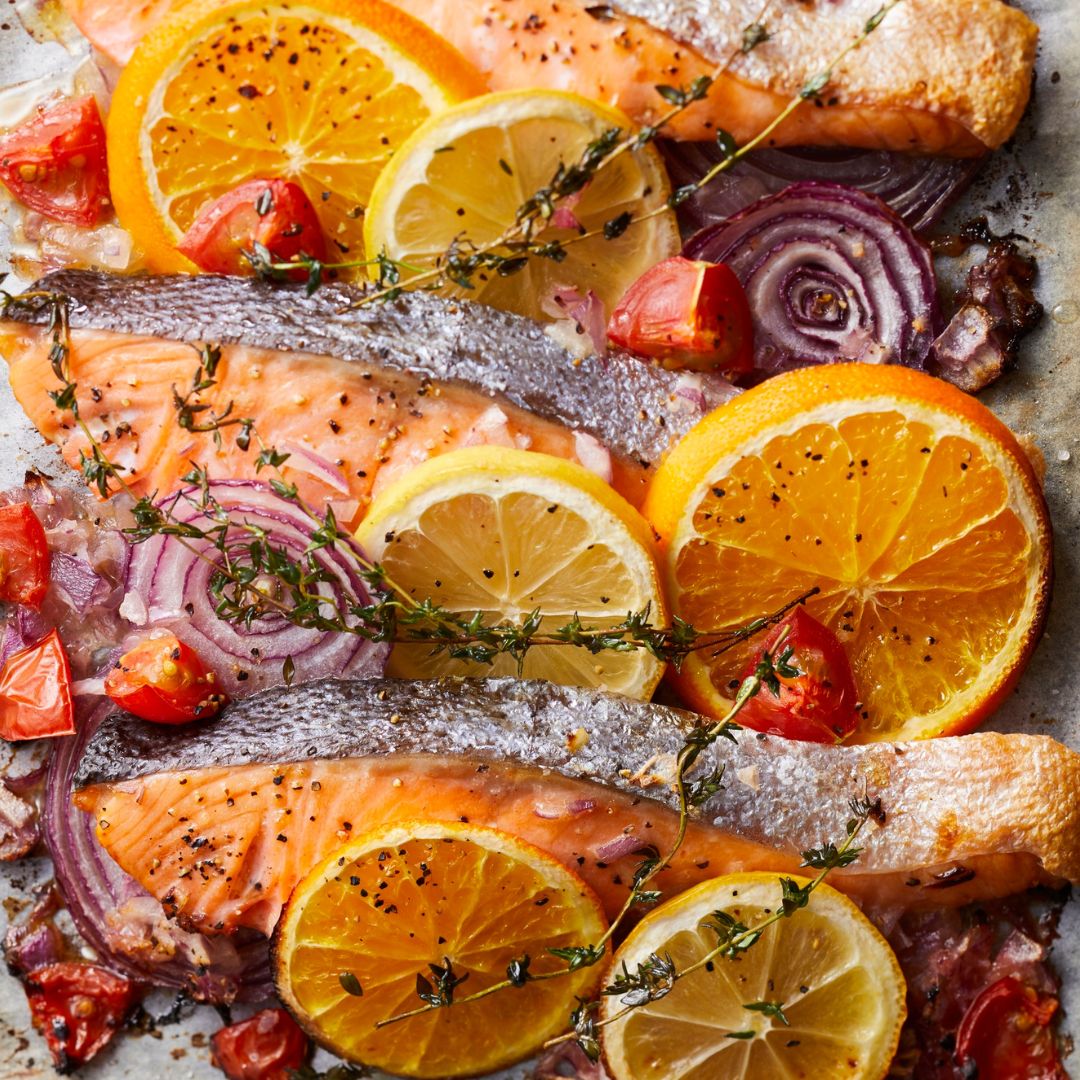
Festive Orange, Cranberry and Pistachio Salmon
December tables are full of food made for celebrating, and that is how it should be. But there are also plenty of evenings between the parties when you want something that feels special without being heavy.
This salmon is one of those dishes. A crust of pistachios, orange zest and parsley sits on top of the fish, with roasted sprouts, carrots, red onion and sharp cranberries on the same tray, served over warm Puy lentils dressed with orange. It looks festive, takes around 40 minutes, and works just as well for a quiet supper as for a Christmas Eve dinner with friends.
It also brings together a lot of what we have talked about this month for PMOS, previously known as PCOS. Each serving provides around 40g of protein and 15g of fibre, with oily fish, nuts, pulses and plenty of vegetables on one plate.
Serves 4
Ingredients
For the salmon
For the roasted vegetables
For the lentils
To serve
Method
Leftovers keep in the fridge for up to two days and are good cold, flaked through the lentils for lunch.
Alternatives
New potatoes instead of lentils. Boil 600g new potatoes, halved, for 15 to 20 minutes until tender, then toss with the orange dressing, spinach and parsley. With potatoes in place of the lentils, each serving provides around 35g of protein and 10g of fibre.
Trout instead of salmon. Rainbow or sea trout fillets work just as well. Check them a few minutes earlier, as thinner fillets cook more quickly.
Nut-free. Swap the pistachios for pumpkin seeds, which give a similar colour and crunch.
If your usual fibre intake is low, start with a smaller portion of lentils and build up gradually.
Why This Works Well for PMOS
The salmon and lentils provide most of the protein, with a little more from the pistachios. That is comfortably above the 25 to 30g per meal we discussed in November as helpful for fullness.
Salmon is also an oily fish. The NHS recommends at least two portions of fish a week, one of which should be oily, and many of us fall short, particularly in winter.
The lentils, sprouts, carrots, onions and cranberries provide the fibre: about 15g per serving, which is half of the 30g a day the NHS recommends for adults.
The carbohydrate comes mainly from the lentils and vegetables, eaten alongside protein, fibre and fat, which tends to produce a steadier rise and fall in blood glucose than carbohydrate eaten on its own.
And it is, above all, a dish to enjoy. Festive food does not need to be a treat to be counted or a "healthy version" of something else. It can simply be good food.
If you're planning a drink with dinner this week, last week's top tips on enjoying Christmas with PMOS are worth a read.
If you would like more meal ideas like this, built around your own tastes, routine and PMOS, you can book a free call to find out how we can support you.
If you've enjoyed this recipe, why not check out some of our other PMOS-friendly recipes over in the Recipe Index?







For any conditions other than PMOS, please feel free to be in touch with our sister clinic Alex Allan Nutrion
PMOS Clinics is part of the Green Leaf Company (London) Ltd, a limited company registered in England and Wales. Registered number: 10990293
Disclaimer: ‘Please note that nutritional therapy is not medical advice - this should always be sought from your doctor or other medical provider. We aim to work alongside your doctor or GP to provide nutritional and lifestyle advice to support any underlying imbalances.'
Website by Phuse Media - Web Design Southend
