
Acne and PMOS
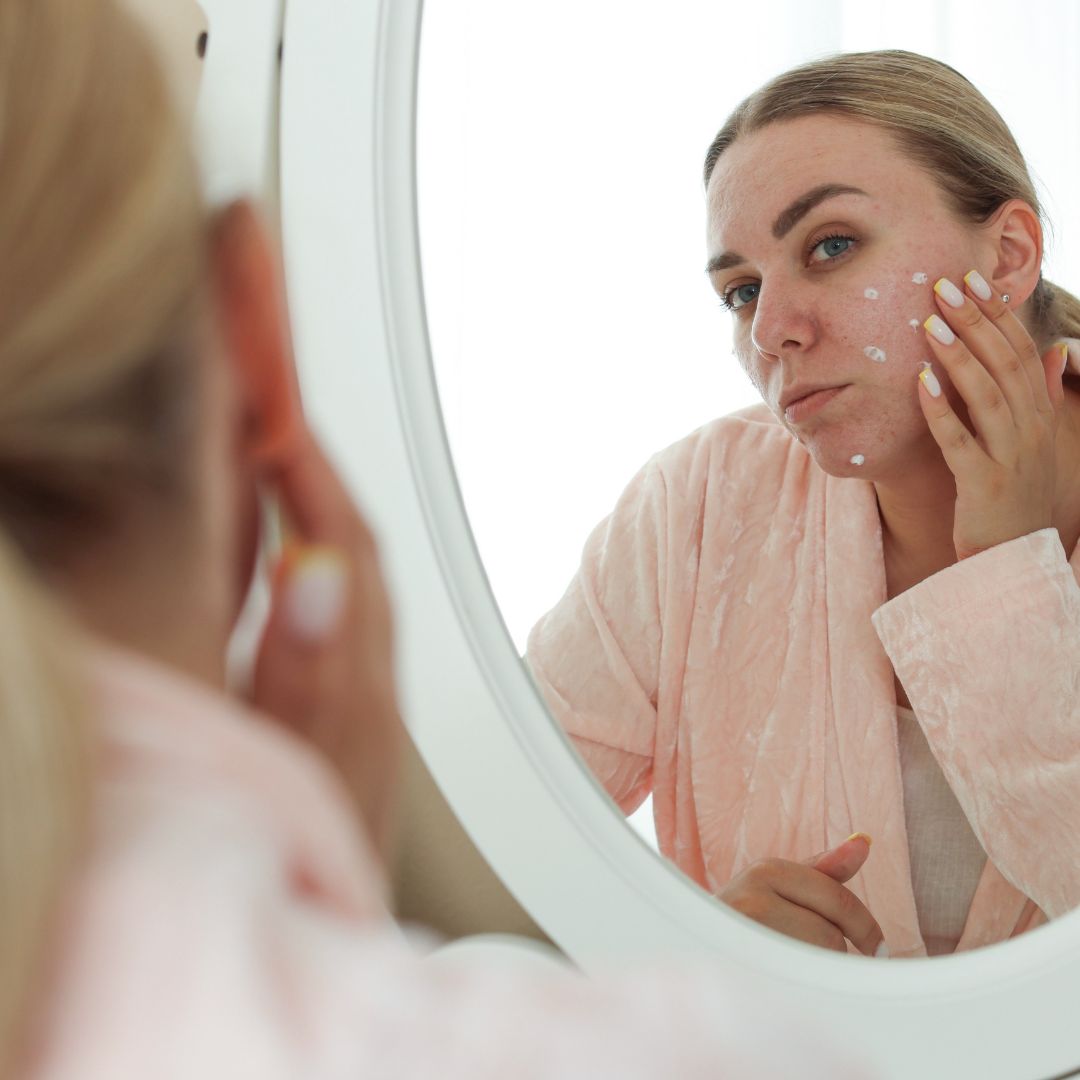
Acne can be one of the most visible and frustrating symptoms of polycystic ovary syndrome, now also known as polyendocrine metabolic ovarian syndrome or PMOS. Unlike an irregular period or a blood test result, skin changes are difficult to put out of your mind. You may see them every time you look in the mirror, apply make-up or join a video call. A flare can appear before an important event, remain painful for days and then leave behind redness, pigmentation or scarring long after the original spot has healed.
For some women, the most confusing part is that they seem to be doing everything “right”. They have bought the right skincare, removed foods from their diet, and followed endless online advice, but their skin still changes throughout the month.
This is because PMOS-related acne develops through an interaction between the sebaceous glands, sex hormones, insulin signalling, inflammation, and the skin microbiome.
Research suggests that acne affects around half of women with PMOS, although estimates vary between studies and populations. However, acne alone does not prove that somebody has PMOS, nor does it necessarily mean that their testosterone will be outside the laboratory range. The 2023 International Evidence-Based PCOS Guidelines describe acne on its own as a relatively weak predictor of biochemical hyperandrogenism. But it still deserves investigation, particularly when it appears alongside irregular periods, excess facial or body hair, thinning scalp hair or metabolic symptoms.
Androgens, Sebum and Skin Changes
Androgens are hormones that include testosterone, androstenedione and dihydrotestosterone, usually shortened to DHT. Everyone produces androgens, but women with PMOS may produce more of them or experience stronger effects from them.
The skin is not simply a passive surface waiting for hormones to arrive. It contains androgen receptors and enzymes that can convert weaker hormones into more active forms. One of these enzymes, 5-alpha-reductase, converts testosterone into DHT, which has a particularly strong effect on androgen receptors.
Sebaceous glands are especially sensitive to androgen signalling. These glands sit alongside hair follicles and produce sebum, the oily substance that helps lubricate and protect the skin. When androgen activity increases, the glands may grow larger and produce more sebum. This can explain why some women notice oily skin as well as acne. However, sebum is only one part of the story.
Acne develops when several processes meet inside the hair follicle. Skin cells may accumulate and obstruct the follicle opening. Sebum becomes trapped behind this blockage, creating a comedone, commonly known as a blackhead or whitehead. Changes in the follicle environment and in the behaviour of Cutibacterium acnes, a normal member of the skin microbiome, can then activate an inflammatory response. The result may be a red spot, pustule or deeper painful nodule.
This helps explain why aggressively drying the skin is not necessarily the answer. Harsh cleansers, scrubs and excessive exfoliation may irritate the skin barrier without addressing the hormonal signals affecting the sebaceous gland.
It also explains why a “normal” testosterone result does not always rule out a hormonal contribution. Some women may have sebaceous glands that are particularly sensitive to ordinary circulating androgen levels. Local conversion of hormones within the skin may also matter, while blood tests provide only a snapshot of what is circulating in the bloodstream.
The characteristic jawline breakout is often described as the defining sign of hormonal acne, but real-life patterns are not always so tidy. PMOS-related acne may occur around the chin and lower face, but it can also affect the cheeks, forehead, chest, shoulders and back. The distribution of spots should therefore be considered alongside the wider hormonal and metabolic picture, rather than used as a diagnosis by itself.
PMOS can also be associated with other visible skin changes. These may include increased oiliness, excess facial hair, scalp hair thinning and acanthosis nigricans. Acanthosis nigricans creates areas of darker, thicker or velvety-feeling skin, commonly around the neck, underarms or groin, and can be associated with insulin resistance.
Acne inflammation may also leave post-inflammatory hyperpigmentation. These are flat areas of altered colour rather than true indented or raised scars. Pigmentation can affect any skin tone, but it is generally more noticeable and may persist for longer in darker skin.
The Role of Insulin Resistance and Inflammation
Insulin is usually discussed in relation to blood sugar, but it also communicates with the ovaries, liver and skin. When cells become less responsive to insulin – which can happen in PMOS – the pancreas may produce more of it to keep blood glucose within a safe range. This is known as compensatory hyperinsulinaemia. It can occur even when a standard glucose or HbA1c result is still within range.
Higher insulin levels can encourage the ovaries to produce more androgens. Insulin may also reduce the liver’s production of sex hormone-binding globulin, or SHBG. SHBG normally binds some circulating testosterone. When SHBG is lower, a greater proportion of testosterone may remain biologically available to interact with tissues such as the skin.
Insulin and insulin-like growth factor 1, known as IGF-1, can also influence the sebaceous gland and the cells lining the follicle. Experimental and observational research suggests that IGF-1 signalling may promote sebaceous gland growth, sebum production, skin-cell proliferation and androgen synthesis.
This does not mean that everyone with acne has insulin resistance or that every breakout is caused by eating carbohydrates. It does help explain why acne, oily skin, irregular cycles and blood sugar difficulties can sometimes appear together in PMOS. It also means that the answer is not to remove all carbohydrates.
Highly restrictive eating can make meals nutritionally unbalanced, increase anxiety around food and become difficult to sustain. The international PMOS guideline concludes that there is no single diet composition that is superior for every woman with PMOS. Nutrition should be flexible, nutritionally adequate and tailored to the individual.
Rather than fearing individual foods, it is usually more helpful to look at the overall pattern. Regular meals containing protein, fibre, colourful vegetables, whole-food carbohydrates and beneficial fats can support metabolic health without requiring perfection. Movement, resistance training, sleep and stress support can also influence insulin sensitivity.
Inflammation provides another connection between PMOS and acne. Acne itself is an inflammatory skin condition, while PMOS is associated in many studies with altered inflammatory and oxidative-stress markers. Insulin resistance, androgen activity, body composition, sleep, stress and dietary pattern can all influence these pathways. However, it would be too simplistic to label someone as having “inflammatory PMOS” on the basis of acne alone.
The gut-skin axis is also receiving increasing research attention. The intestinal microbiome can interact with immune regulation, gut-barrier function and metabolic health, while the skin has its own distinct microbial ecosystem. Early research suggests possible differences in the gut microbiome of people with acne and PMOS, but this field is still developing. We do not yet have enough evidence to claim that a particular probiotic, stool test or “gut cleanse” will resolve hormonal acne.
Skin Symptoms Can Affect Confidence and Wellbeing
Acne is sometimes dismissed as a cosmetic concern, but its impact can extend far beyond appearance. It may affect what you wear, whether you go out without make-up, how comfortable you feel being photographed, and how confident you feel in relationships or at work. Some women spend considerable time checking their skin, covering blemishes, or avoiding social events during a flare.
Women with PMOS already have an increased risk of anxiety, depression, and reduced quality of life. Research has found associations between acne and depressive symptoms within PMOS populations, while studies of acne more broadly consistently report effects on self-esteem and wellbeing.
The international PMOS guideline recommends that healthcare professionals recognise the impact of PMOS symptoms on quality of life and screen women with PMOS for anxiety and depression. NICE guidance also advises considering specialist referral when acne causes persistent pigmentation, scarring or significant psychological distress, regardless of its apparent physical severity.
Seeking help for acne is therefore not vain. Nor should you be expected to manage it through nutrition alone.
Persistent, painful, cystic or scarring acne should be discussed with your GP, pharmacist or dermatologist. Medical skincare and prescription treatments can be important, particularly when there is a risk of permanent scarring. A sudden onset of severe acne or rapidly worsening androgen-related symptoms also warrants medical assessment.
Nutrition and lifestyle support can sit alongside this care by exploring factors such as blood sugar regulation, dietary adequacy, inflammation, stress, sleep, digestive health and any pattern of restrictive eating. The aim is not to promise perfectly clear skin or blame you for every flare. It is to understand more of the hormonal and metabolic environment in which your skin is functioning.
If you have tried increasingly restrictive diets, complicated supplement plans or harsh skincare without understanding what may be driving your symptoms, a more individual assessment may help.
You can also read more about the relationship between PMOS and emotional wellbeing in our Food–Mood Connection blog.
At PMOS Clinics, we take time to consider your skin symptoms alongside your cycles, metabolic health, nutrition, stress, sleep and wider health history. This allows us to build a realistic plan that supports the whole person rather than focusing only on what is visible in the mirror.
Book a Skin and Hormone Assessment to explore the factors that may be contributing to your symptoms and receive personalised nutrition and lifestyle support.
This article is for educational purposes and does not provide medical diagnosis or treatment. Nutritional therapy works alongside, rather than instead of, care from your GP, dermatologist or other qualified medical professional. Please seek medical advice for severe, painful, rapidly worsening or scarring acne, persistent pigmentation, sudden changes in androgen-related symptoms, or concerns about your mental wellbeing.






For any conditions other than PMOS, please feel free to be in touch with our sister clinic Alex Allan Nutrion
PMOS Clinics is part of the Green Leaf Company (London) Ltd, a limited company registered in England and Wales. Registered number: 10990293
Disclaimer: ‘Please note that nutritional therapy is not medical advice - this should always be sought from your doctor or other medical provider. We aim to work alongside your doctor or GP to provide nutritional and lifestyle advice to support any underlying imbalances.'
Website by Phuse Media - Web Design Southend
