
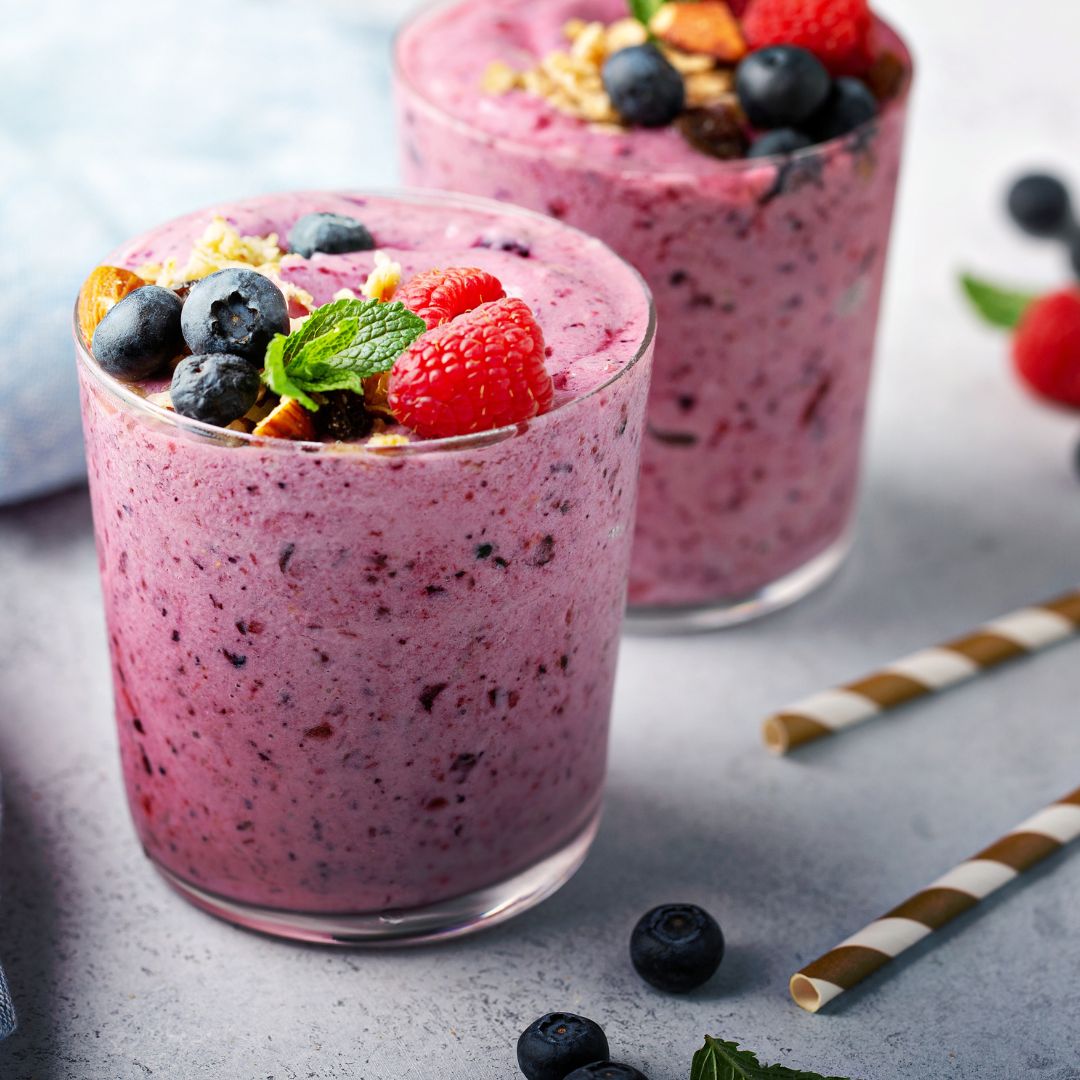
Antioxidant-Rich Summer Berry Smoothie
Cool, colourful and ready in five minutes, this summer berry smoothie makes a refreshing breakfast for warmer mornings.
Unlike smoothies made mainly from fruit juice, this recipe combines whole berries with protein, fibre and beneficial fats. This makes it more satisfying and creates a more balanced breakfast for women with polycystic ovary syndrome (PCOS), now also known as polyendocrine metabolic ovarian syndrome or PMOS.
The combination of mixed berries, protein-rich yoghurt or soya milk, ground flaxseed and chia seeds also provides nutrients involved in normal skin structure, antioxidant defence and digestive health.
It is important not to over-promise what a recipe can do. No smoothie can clear acne or correct a hormonal imbalance by itself. Skin health is influenced by many things including genes, androgen activity, insulin signalling, inflammation, stress and sleep, as well as the wider diet.
However, this smoothie can offer a convenient way to include protein, fibre, omega-3-rich seeds and several colourful plant foods in one meal.
Why Antioxidants Matter for Skin Health
Skin is continually exposed to ultraviolet light, pollution and normal metabolic processes that generate unstable molecules known as free radicals.
The body has its own antioxidant defence systems to manage these molecules. Nutrients and plant compounds obtained through food help support these systems, but antioxidants do not act as a simple internal sunscreen or “detox” treatment.
Berries are particularly rich in a family of polyphenols called anthocyanins. These are the plant pigments responsible for many of their red, purple and blue colours. Research suggests that anthocyanins can interact with antioxidant and inflammatory signalling pathways, although we cannot assume that eating berries will directly treat acne.
Berries also provide vitamin C, which is required for normal collagen formation and contributes to the protection of cells from oxidative stress.
Fresh berries are wonderful in summer, but frozen berries work just as well. They are often less expensive, reduce food waste and make the smoothie naturally cold and thick.
The protein and seeds are just as important as the berries. A fruit-only smoothie may be digested quickly and may not keep you satisfied for long. Adding protein, fat and fibre creates a more complete meal.
Serves 1
Ingredients
Method
Depending on the yoghurt and milk used, the basic recipe provides approximately 20 to 25 grams of protein. Adding a good quality protein powder can bring this closer to 30 grams.
Optional Additions:
To increase the protein
Add one of the following:
Choose a protein powder with a simple ingredient list and no sugars or sweeteners. A pea, soya or blended plant protein can be used if whey or dairy does not suit you.
Whey protein does not cause acne in everybody, but there are reports of acne worsening in some susceptible people after starting whey-based sports supplements. If your skin changed after introducing one, try a non-whey alternative rather than removing all dairy foods without good reason.
To increase the fibre
You could add:
Increase concentrated fibres gradually and drink enough fluid. Adding large amounts suddenly may cause bloating or discomfort.
To make it more filling
Smoothies are convenient, but drinking a meal can feel less satisfying than chewing one.
Make the smoothie thick enough to eat from a bowl and sprinkle with whole nuts and berries, or have it with a couple of boiled eggs, a slice of seeded toast or another protein-rich food if you know that smoothies alone do not keep you full.
You can also explore more balanced breakfasts, snacks and main meals in our PMOS Clinics Recipe Index.








For any conditions other than PMOS, please feel free to be in touch with our sister clinic Alex Allan Nutrion
PMOS Clinics is part of the Green Leaf Company (London) Ltd, a limited company registered in England and Wales. Registered number: 10990293
Disclaimer: ‘Please note that nutritional therapy is not medical advice - this should always be sought from your doctor or other medical provider. We aim to work alongside your doctor or GP to provide nutritional and lifestyle advice to support any underlying imbalances.'
Website by Phuse Media - Web Design Southend
